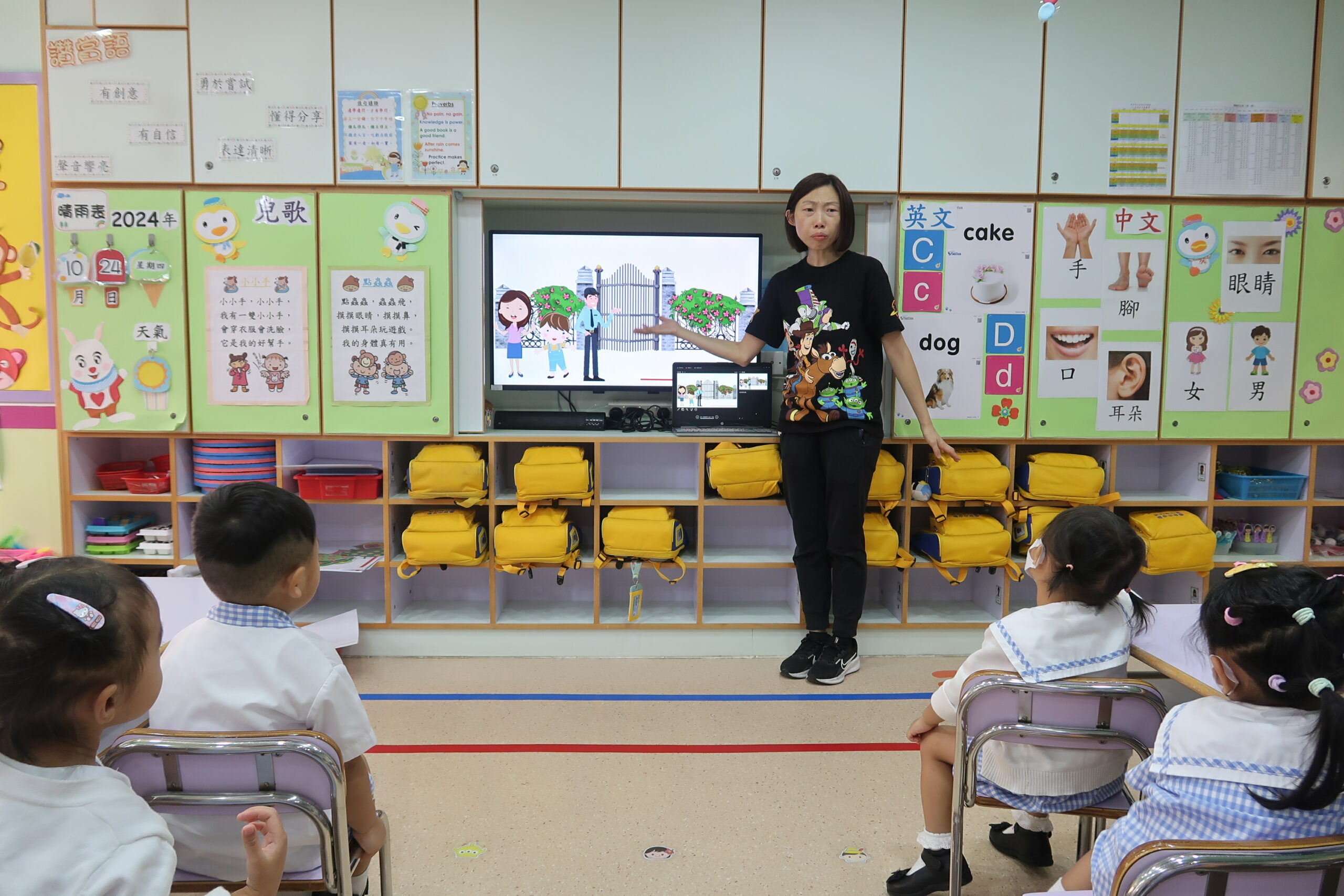
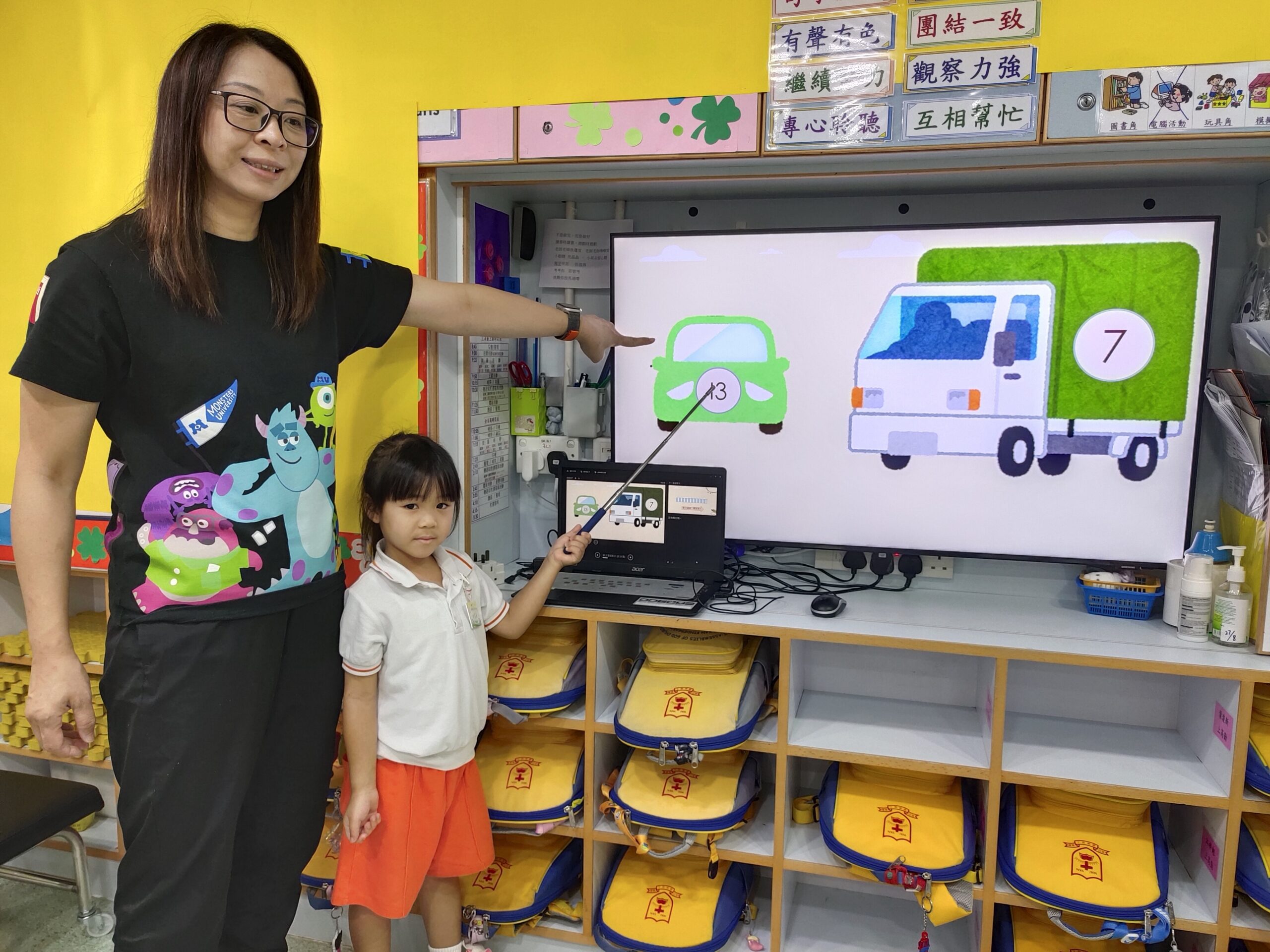
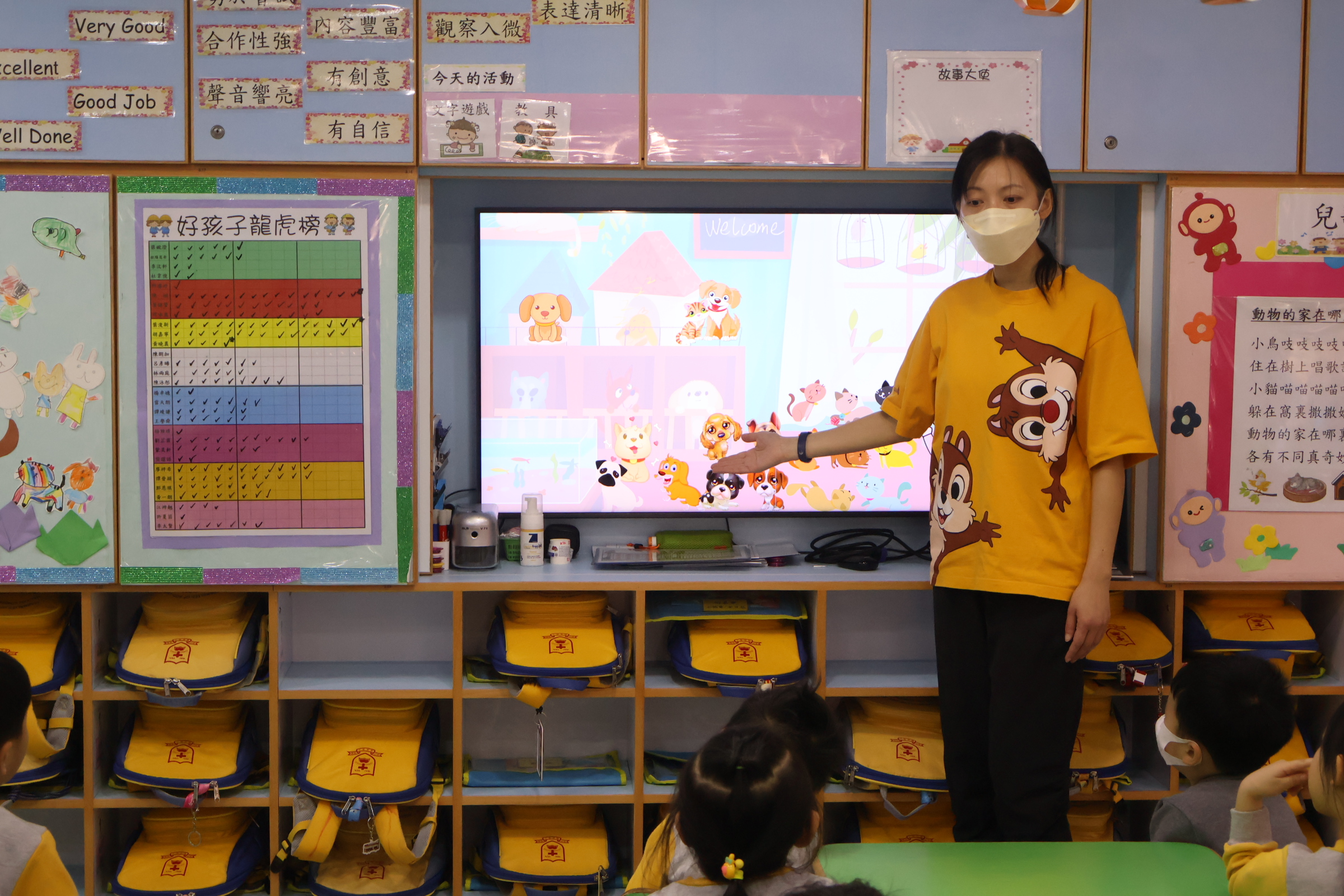
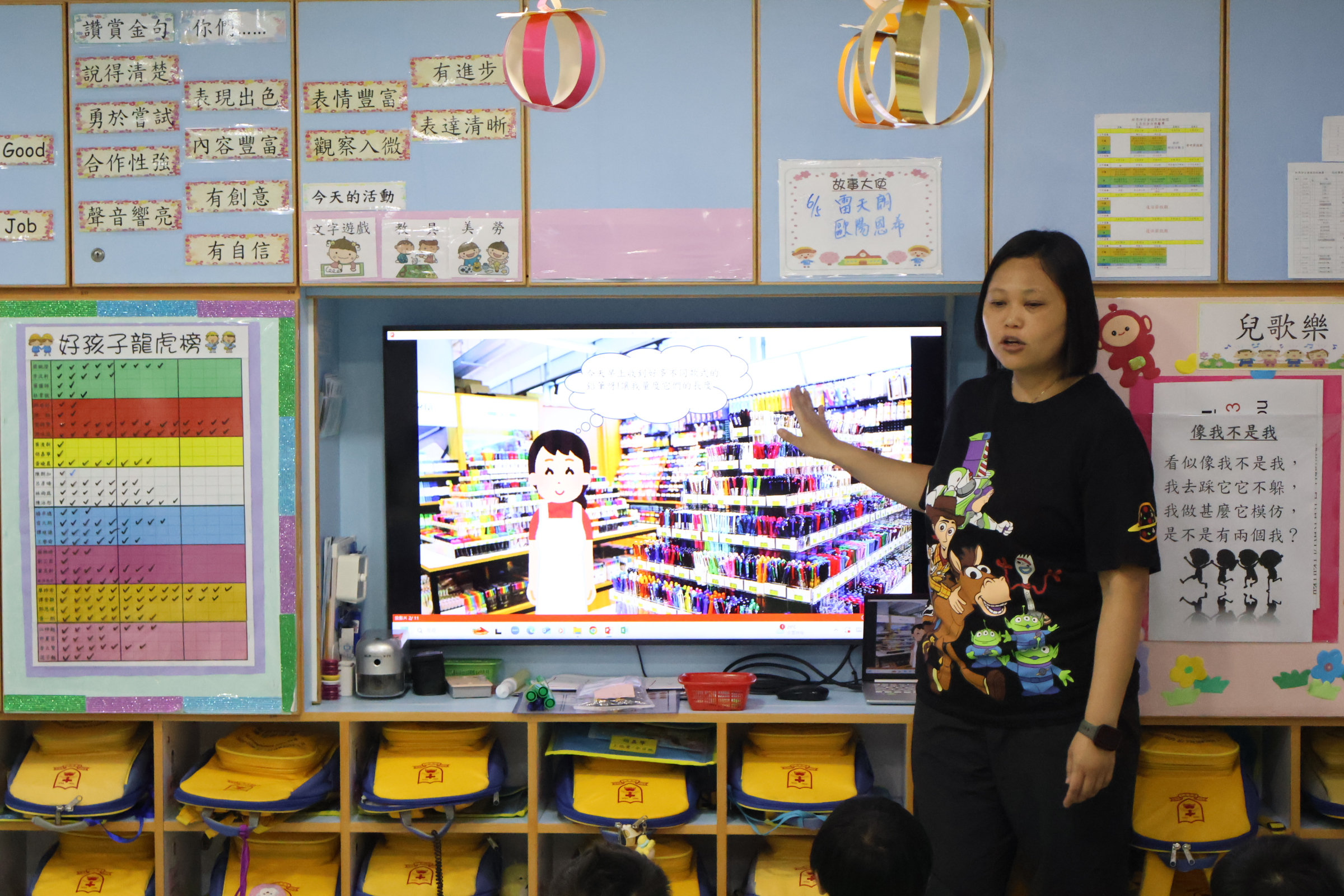
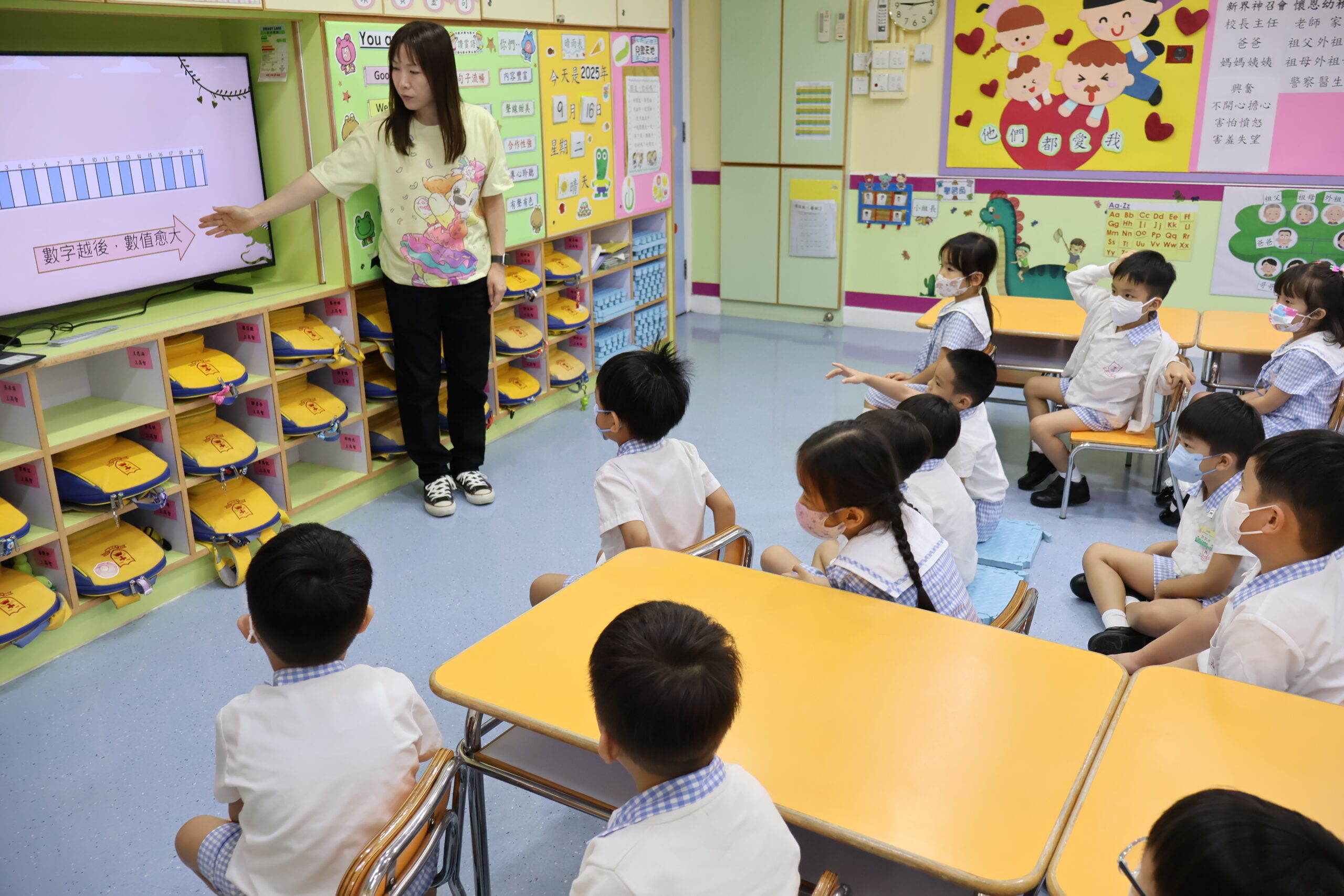
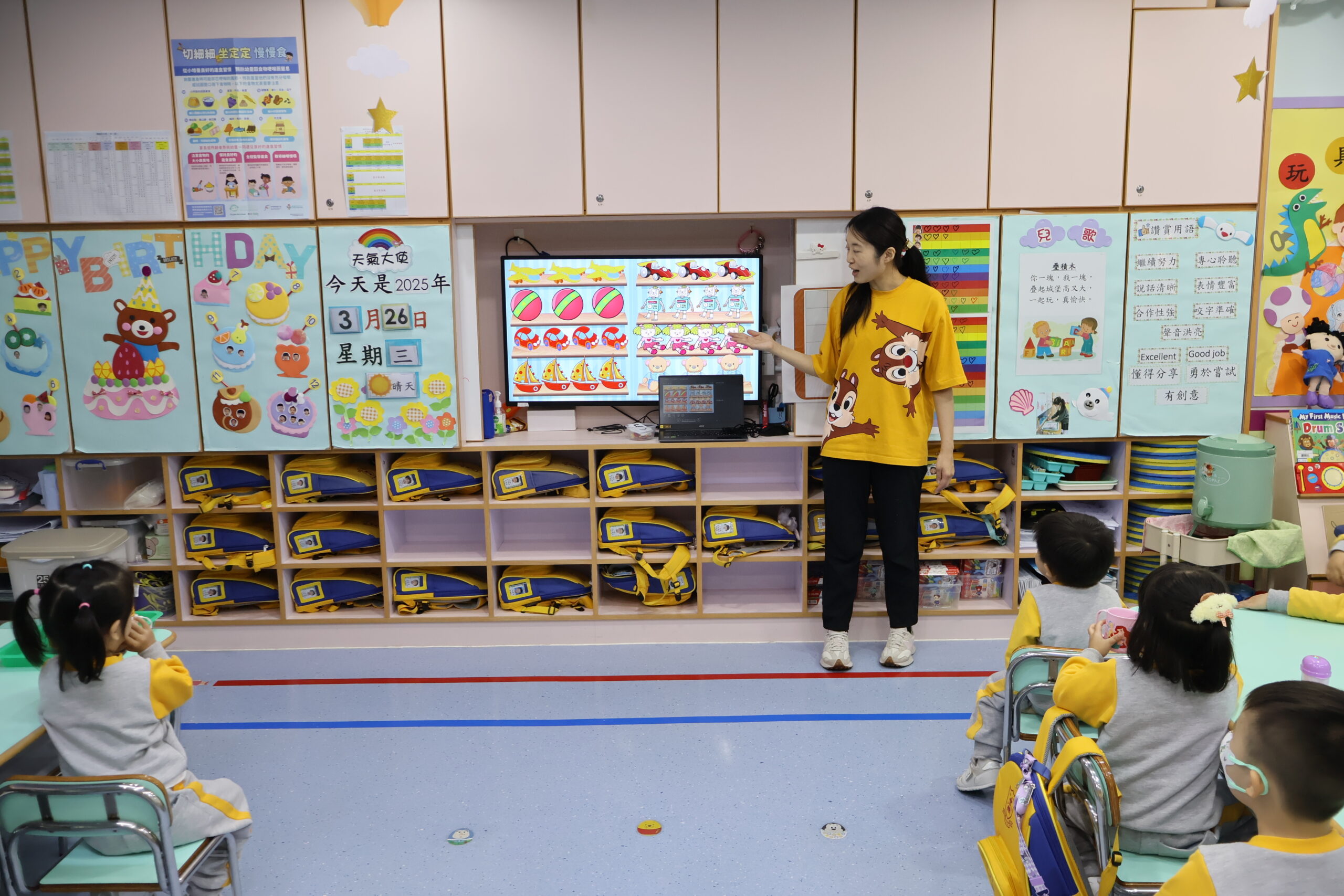
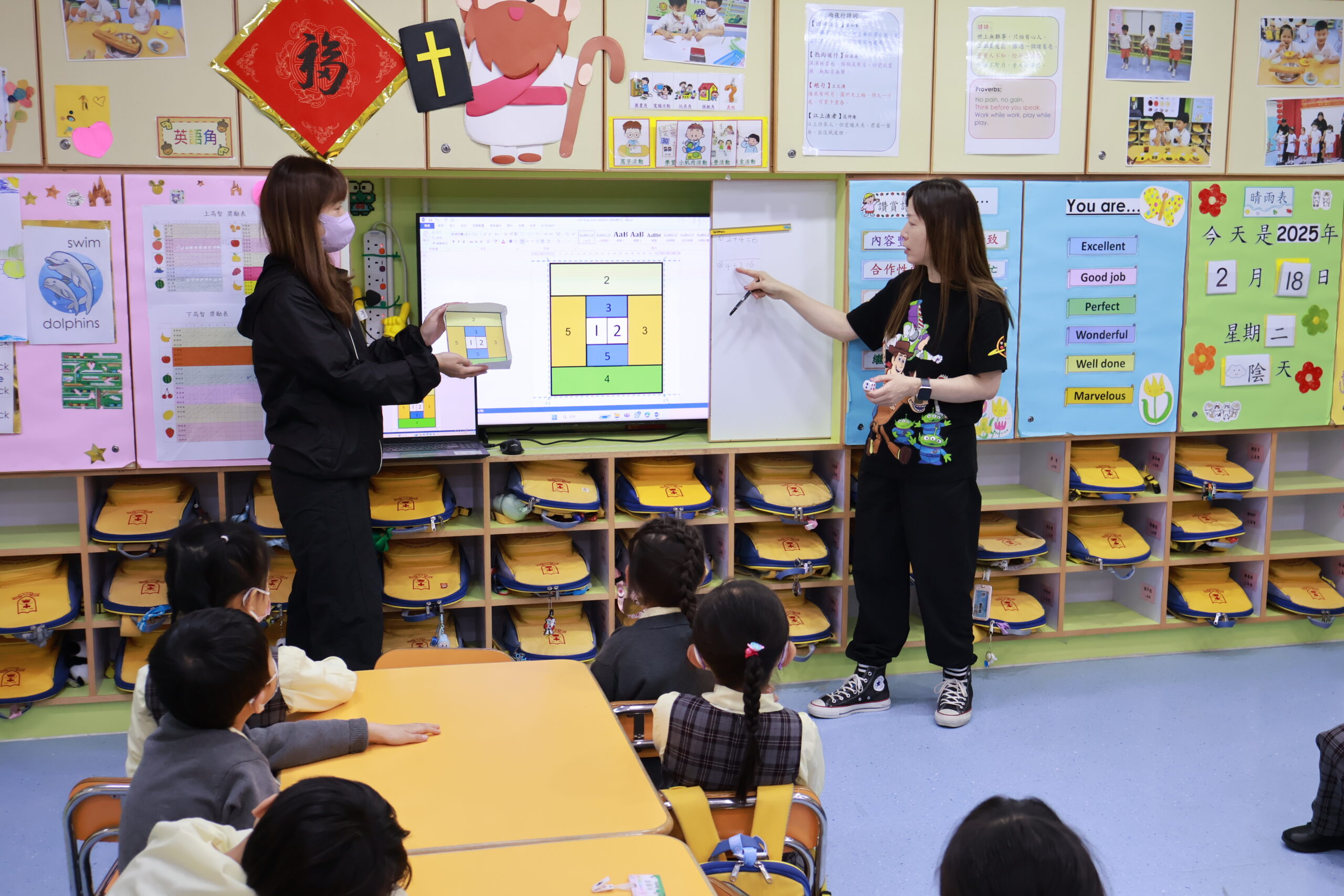
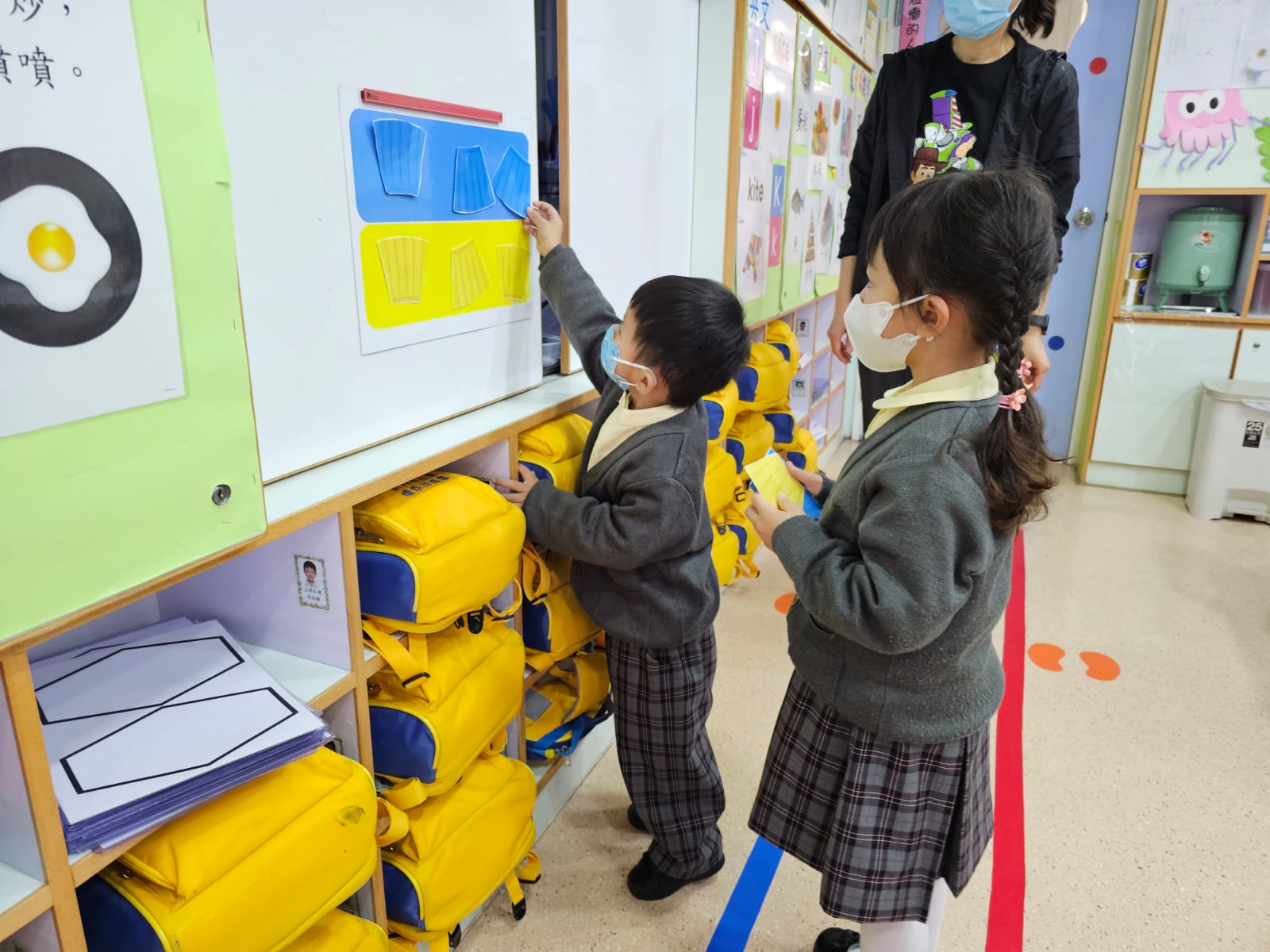
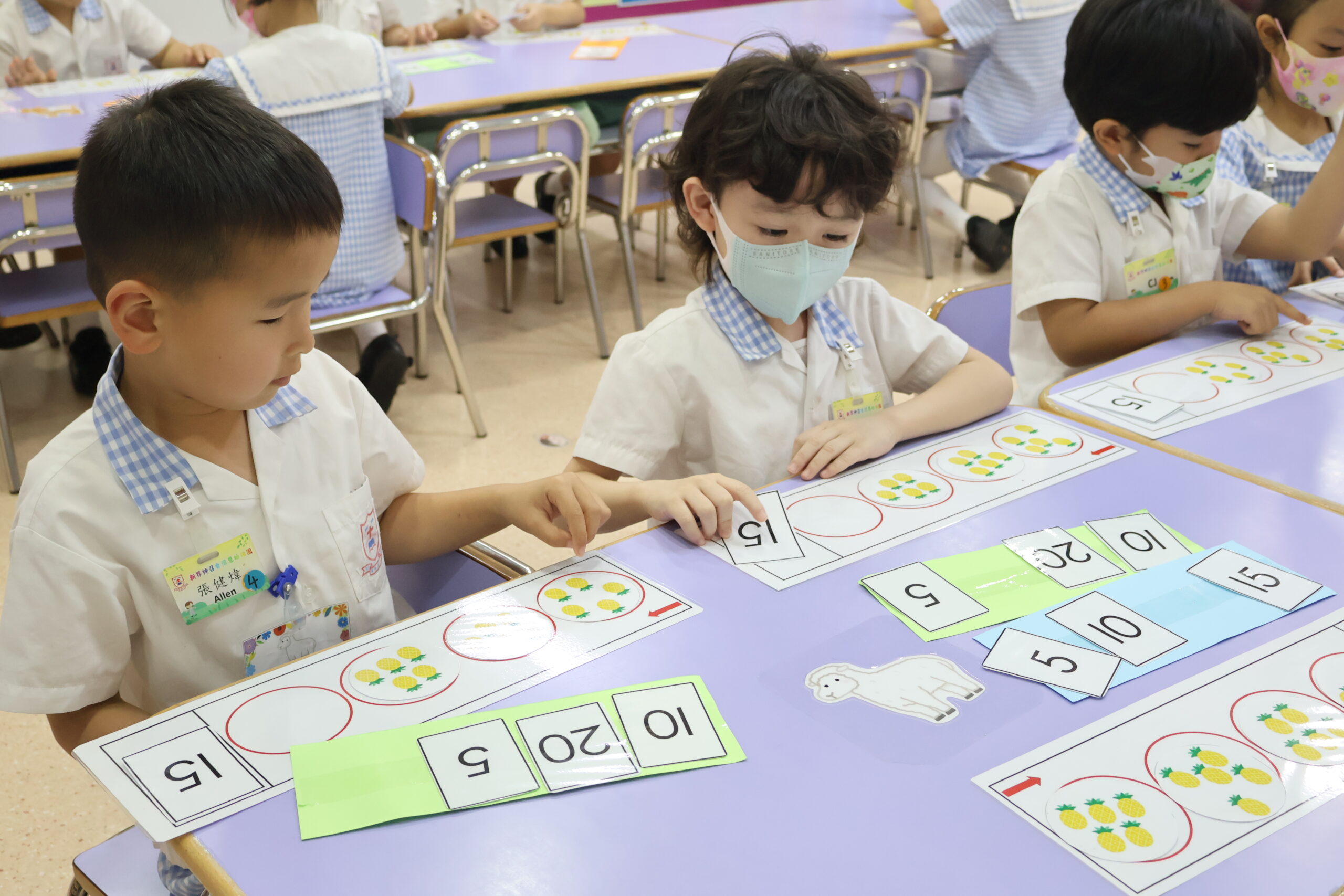
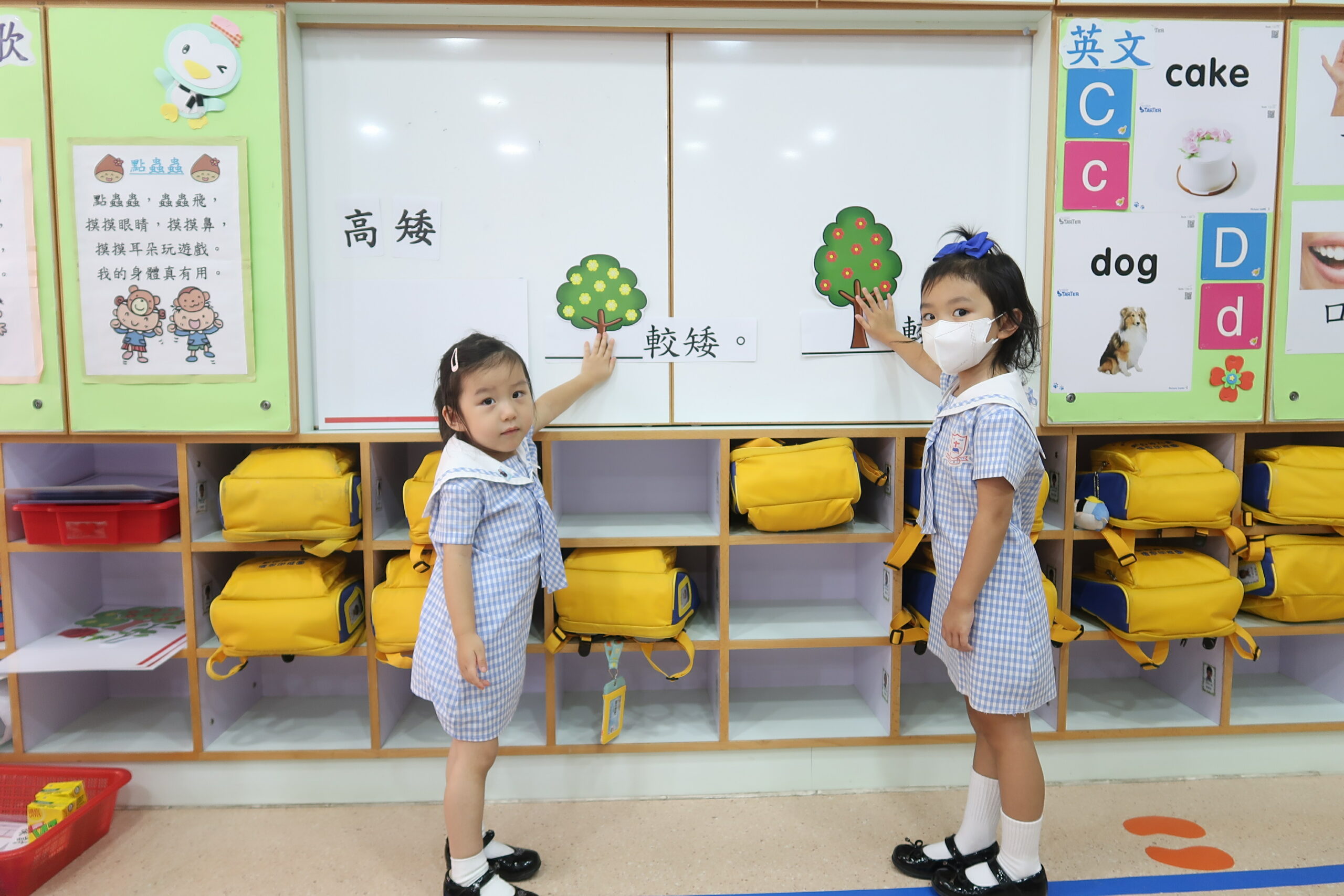
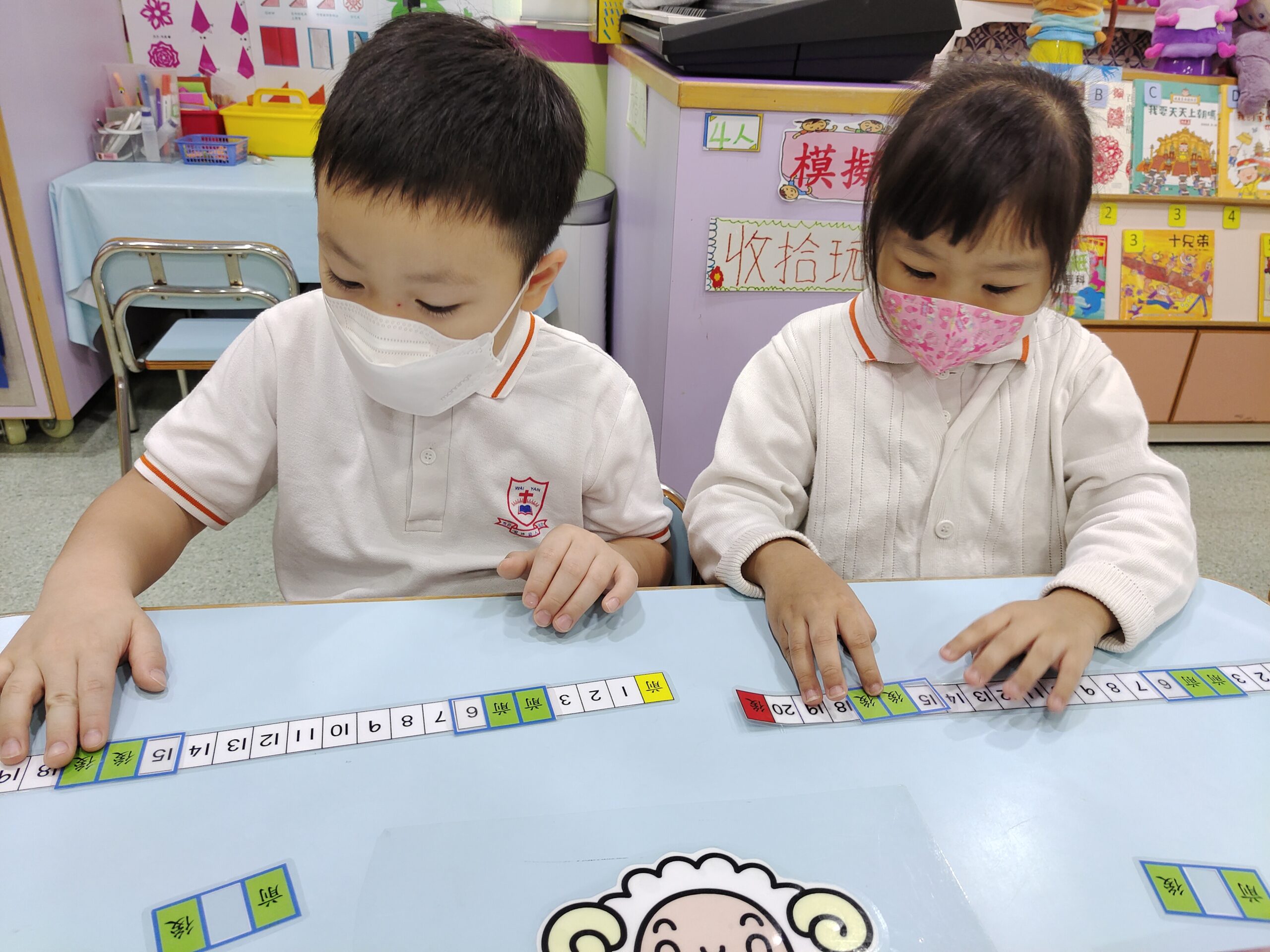
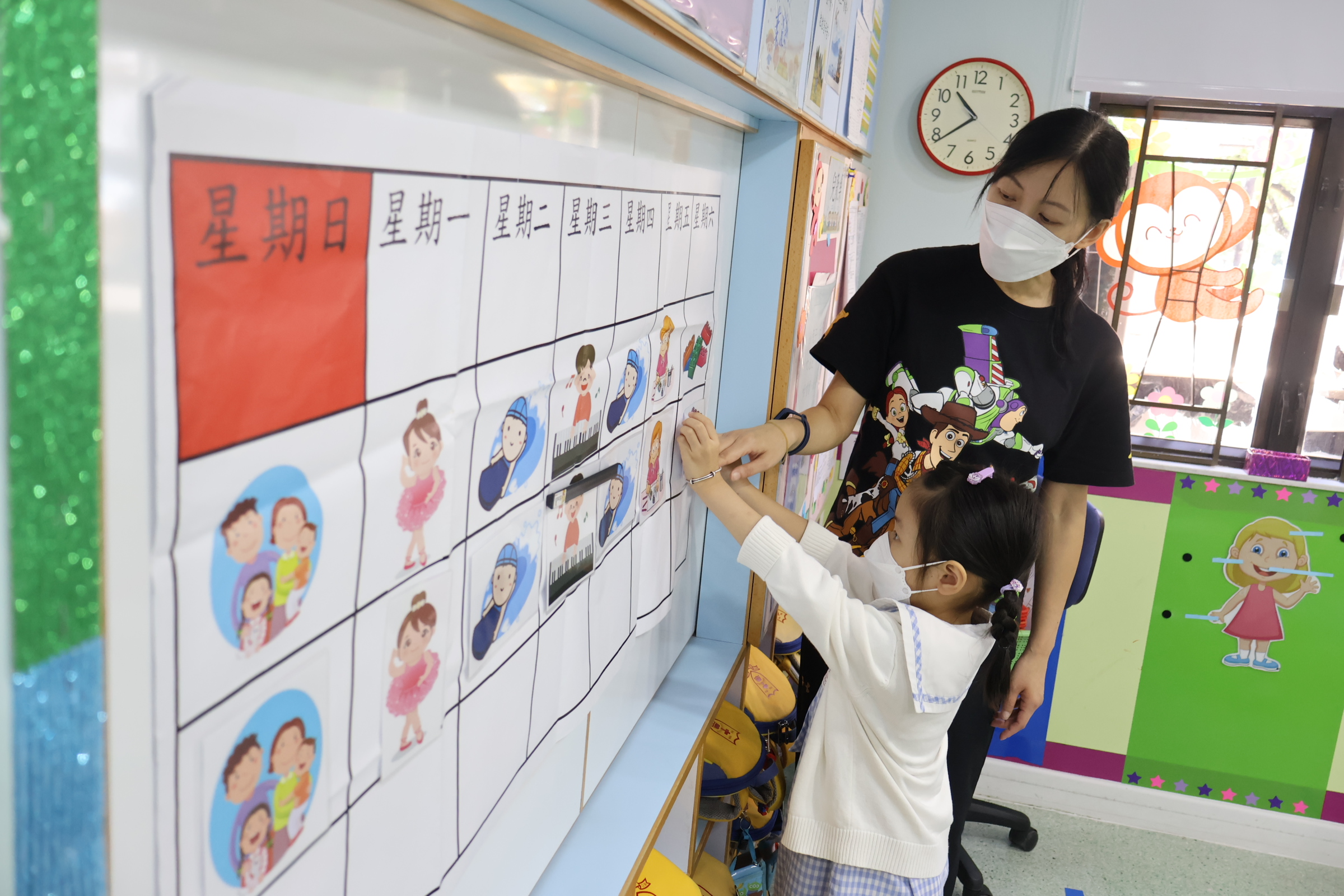
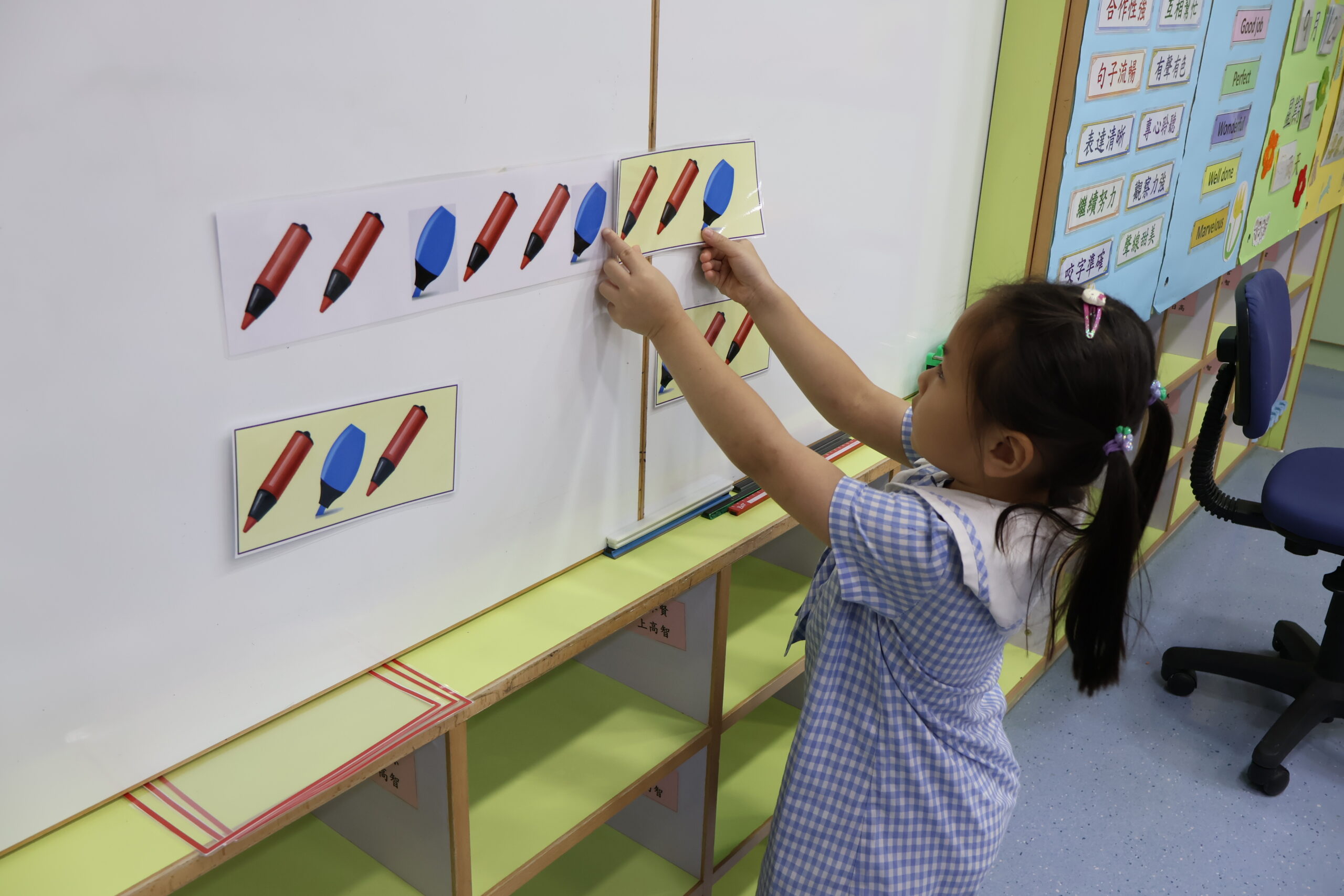
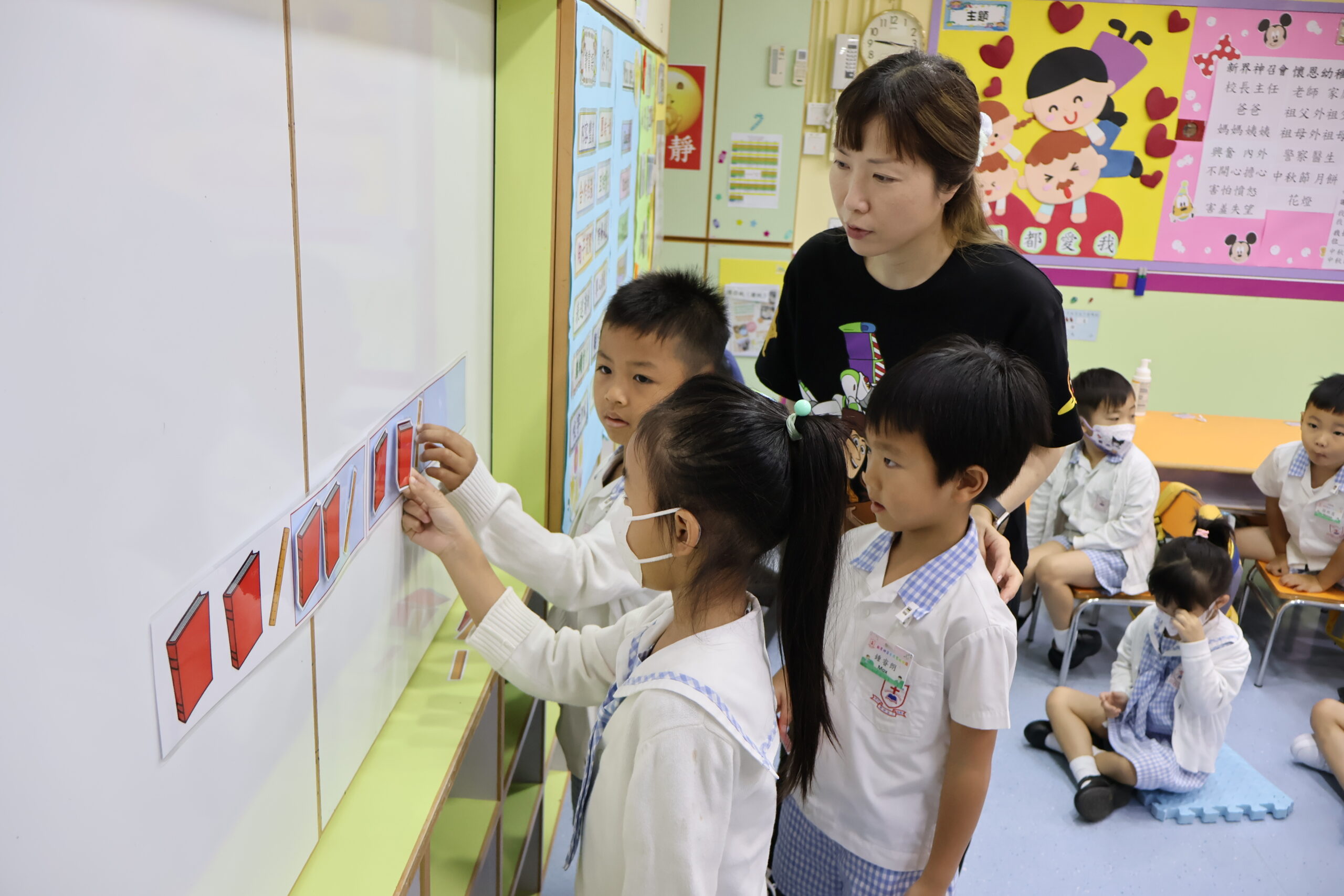
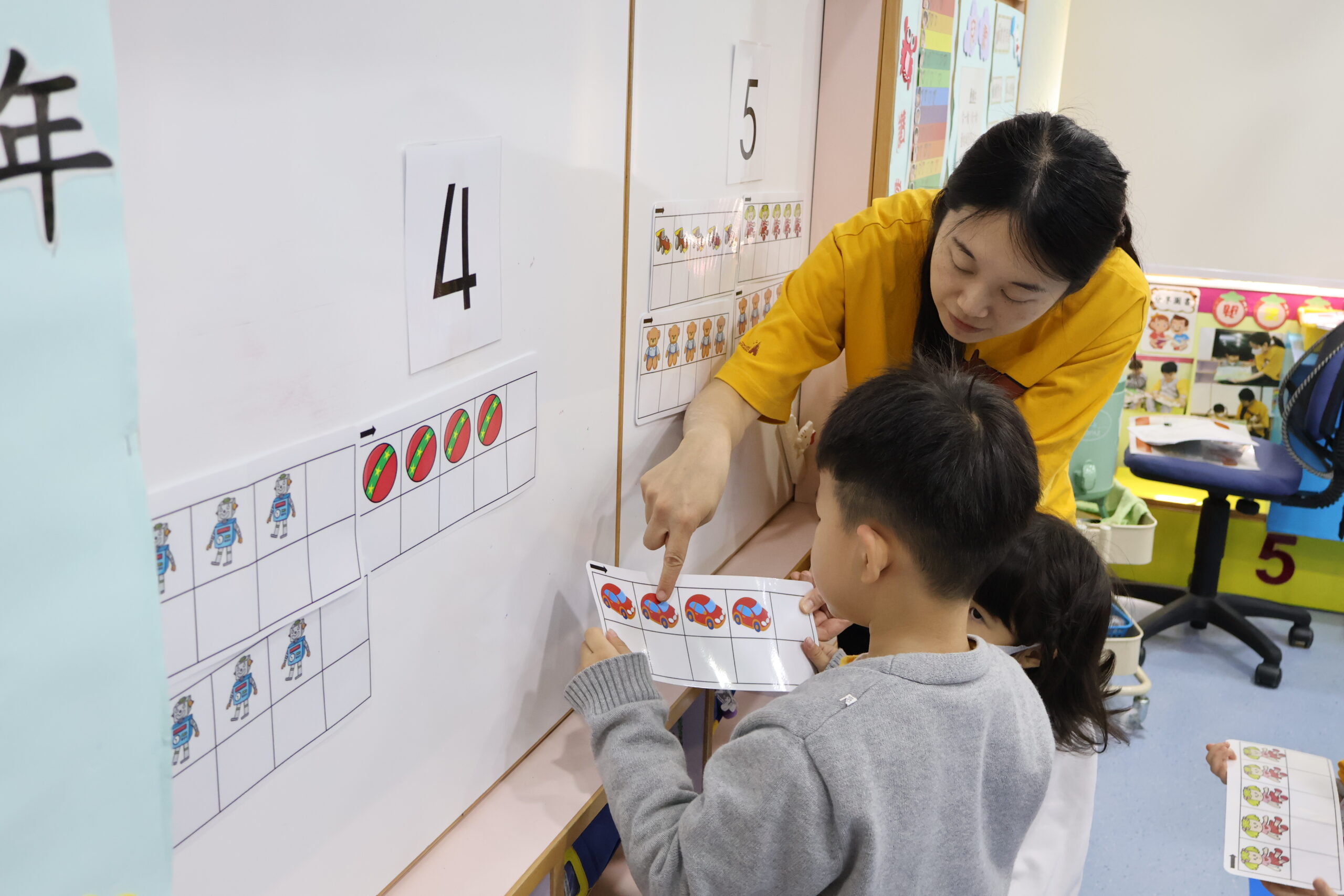
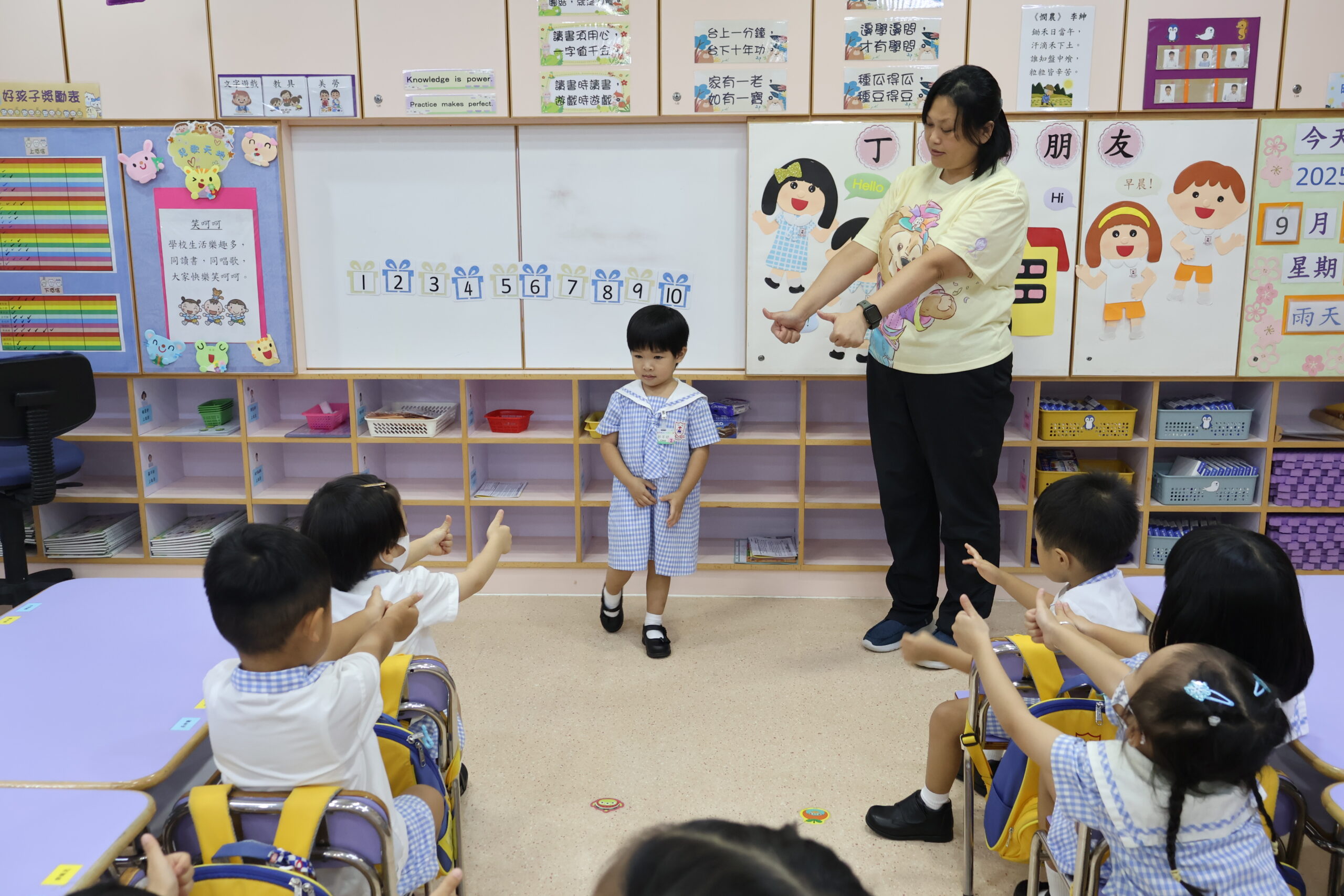
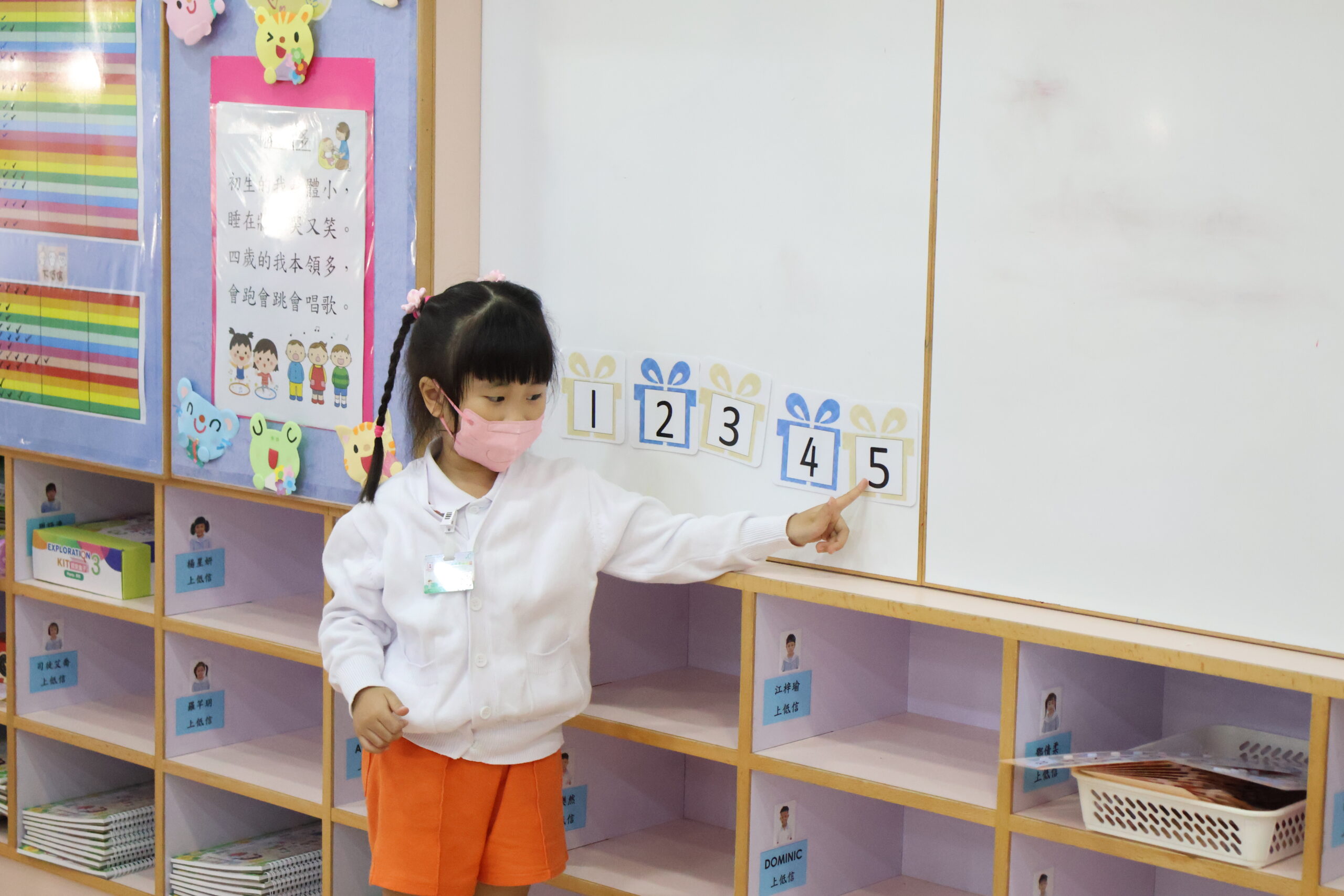
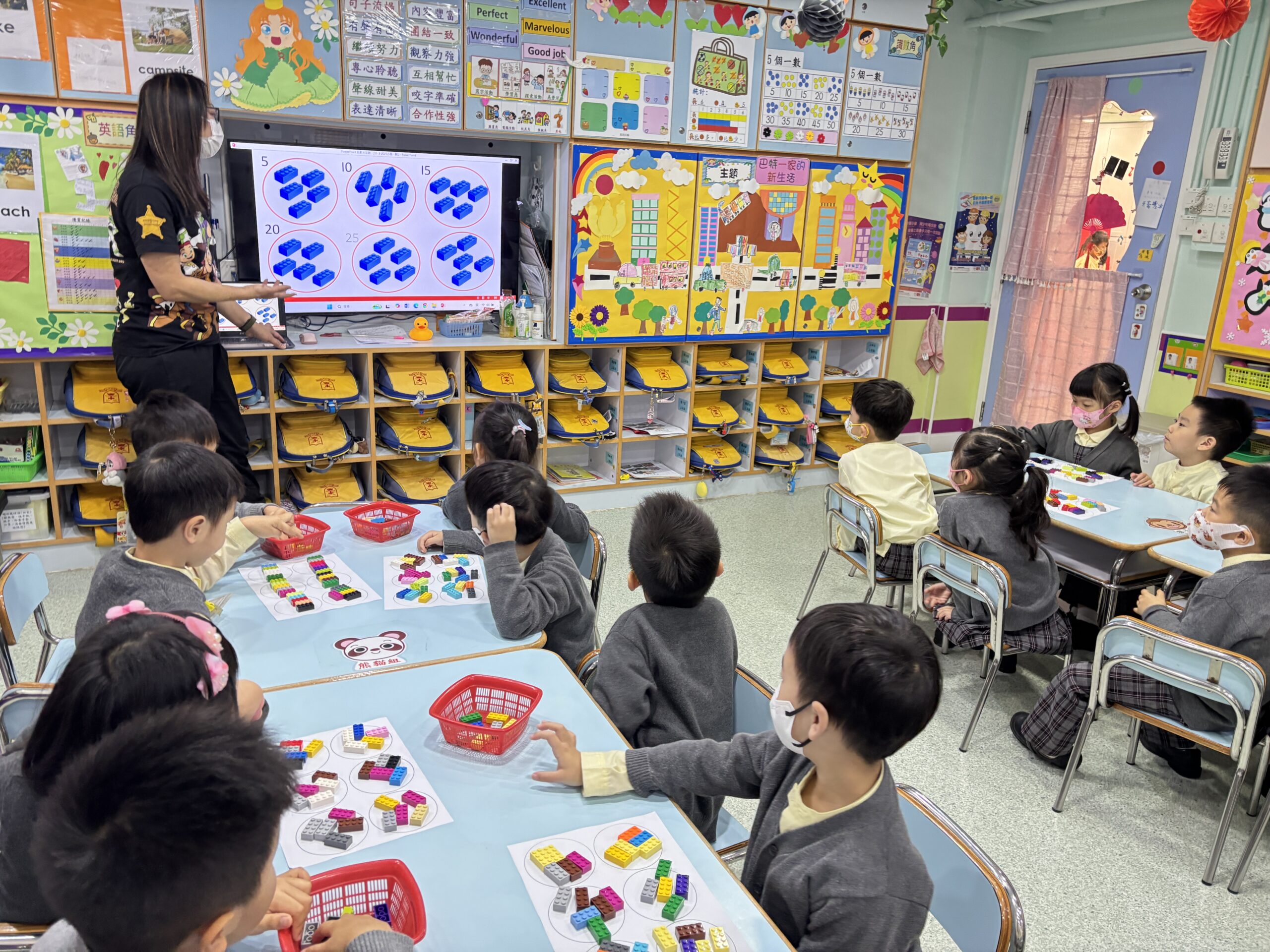
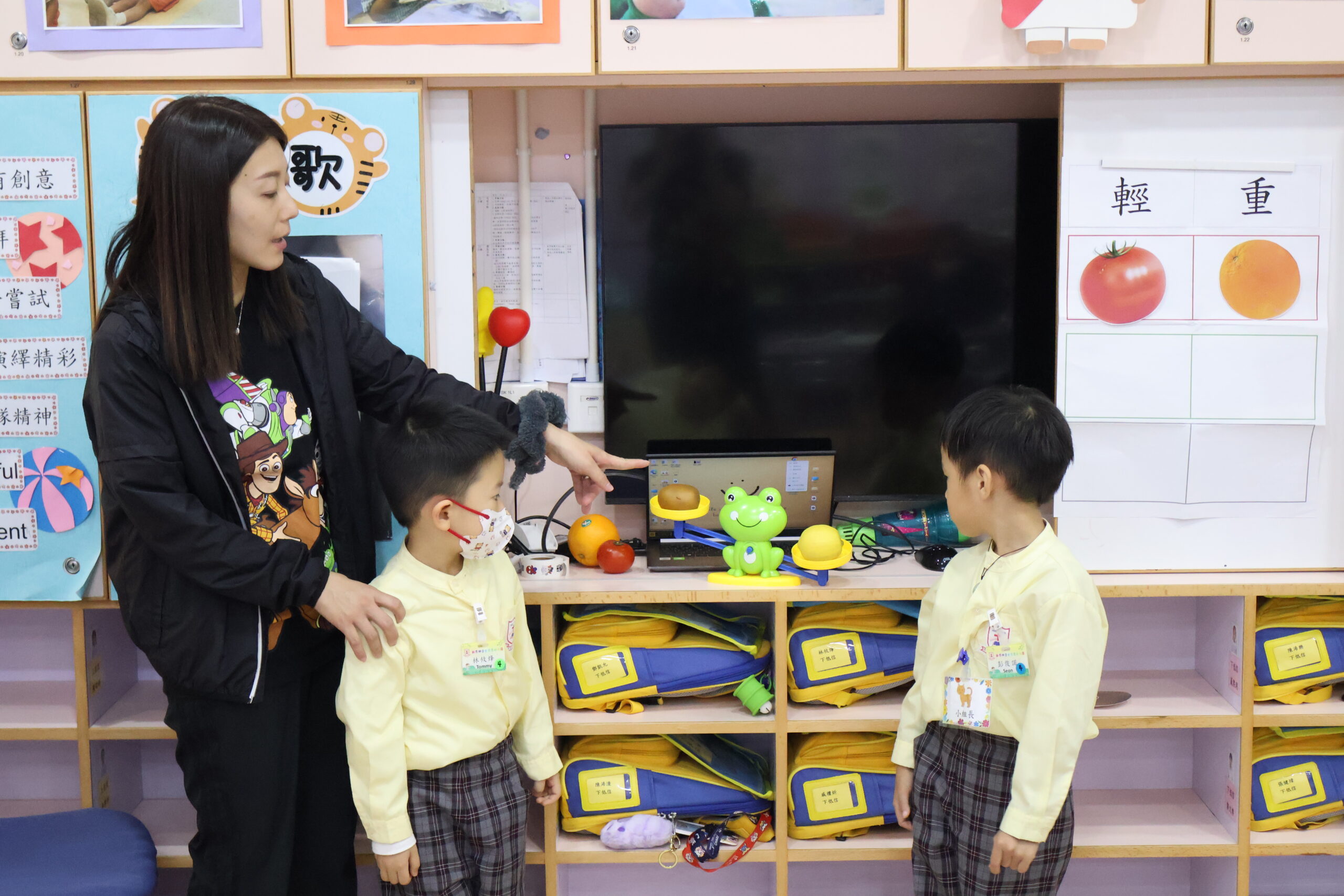
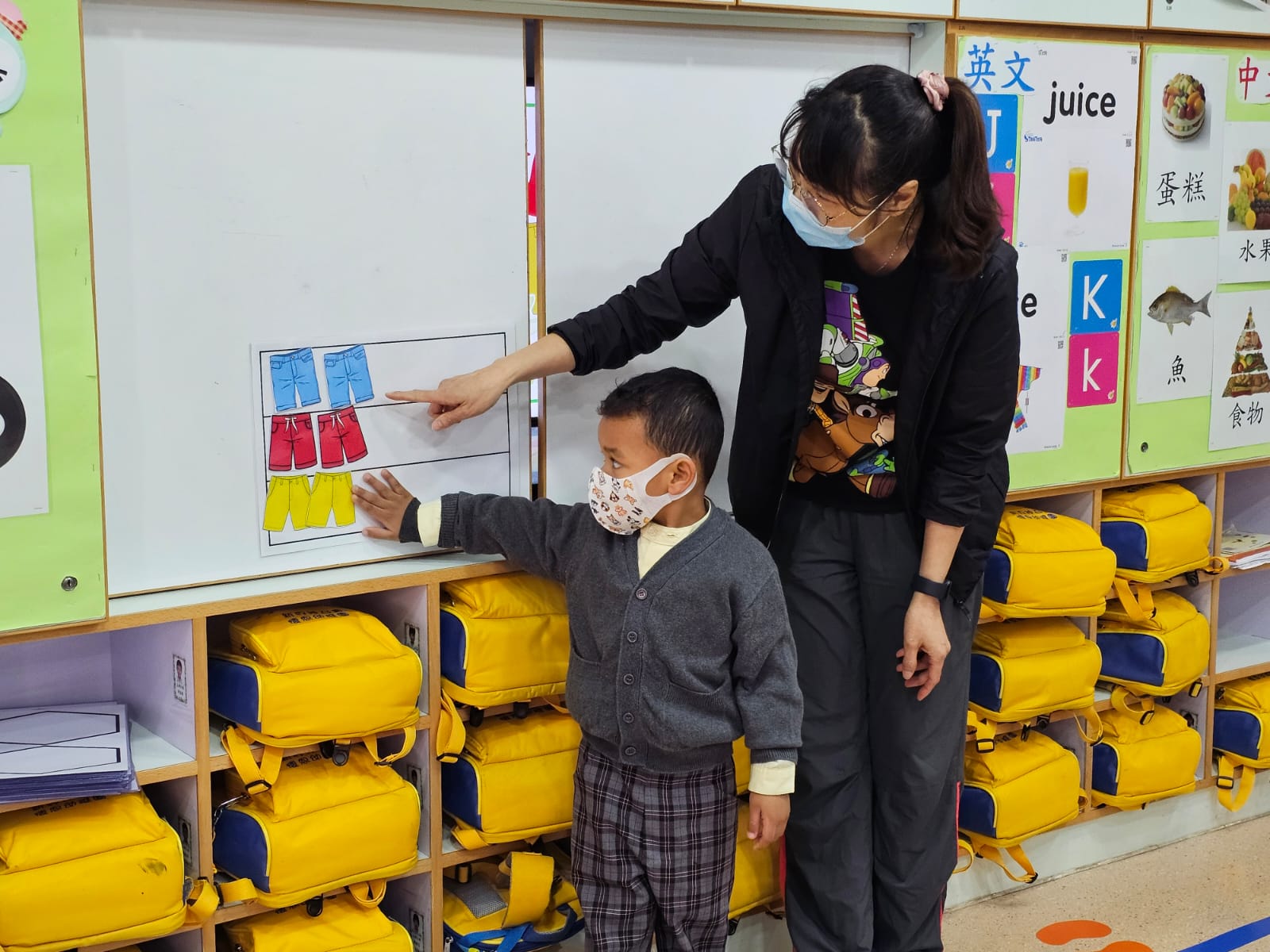
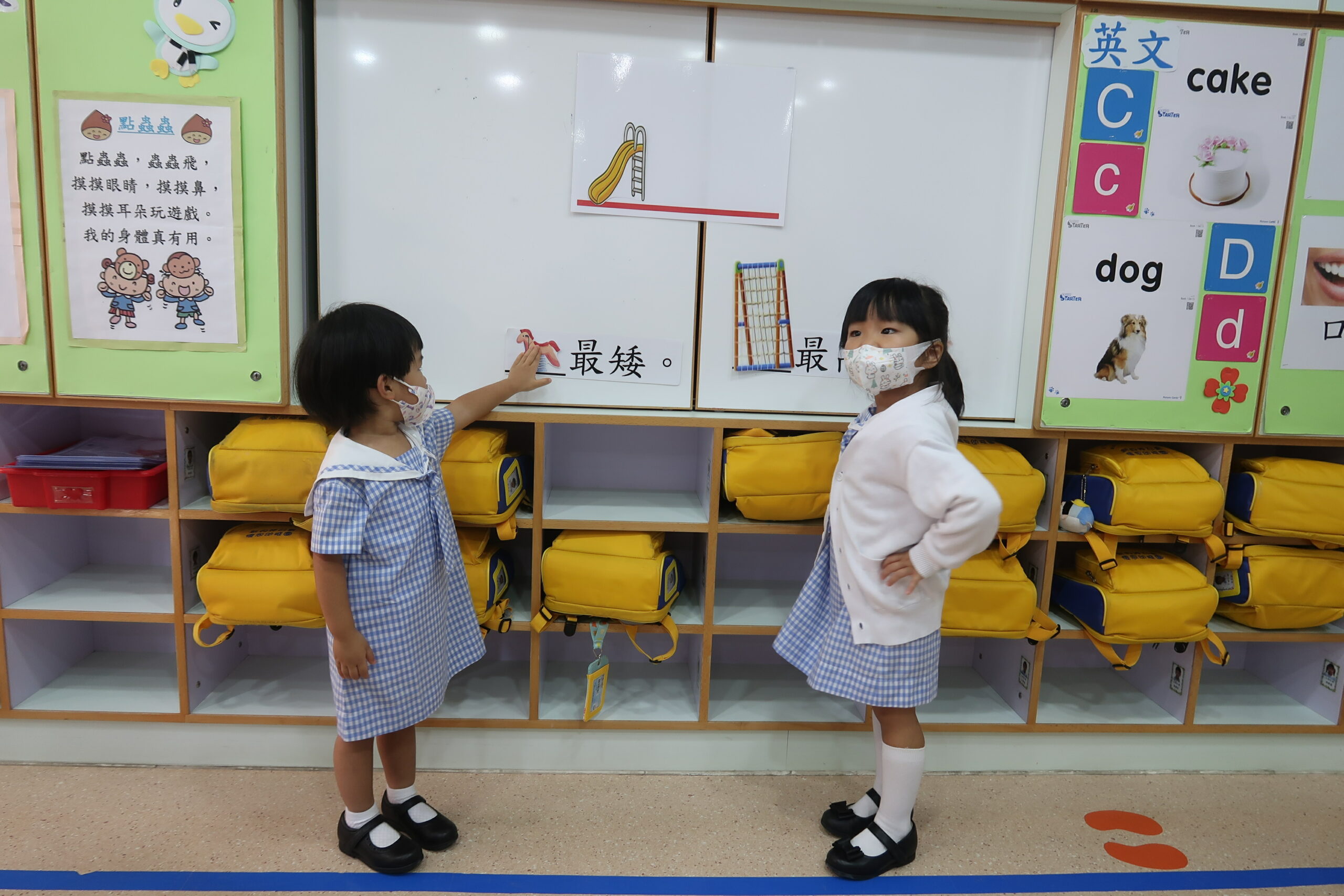
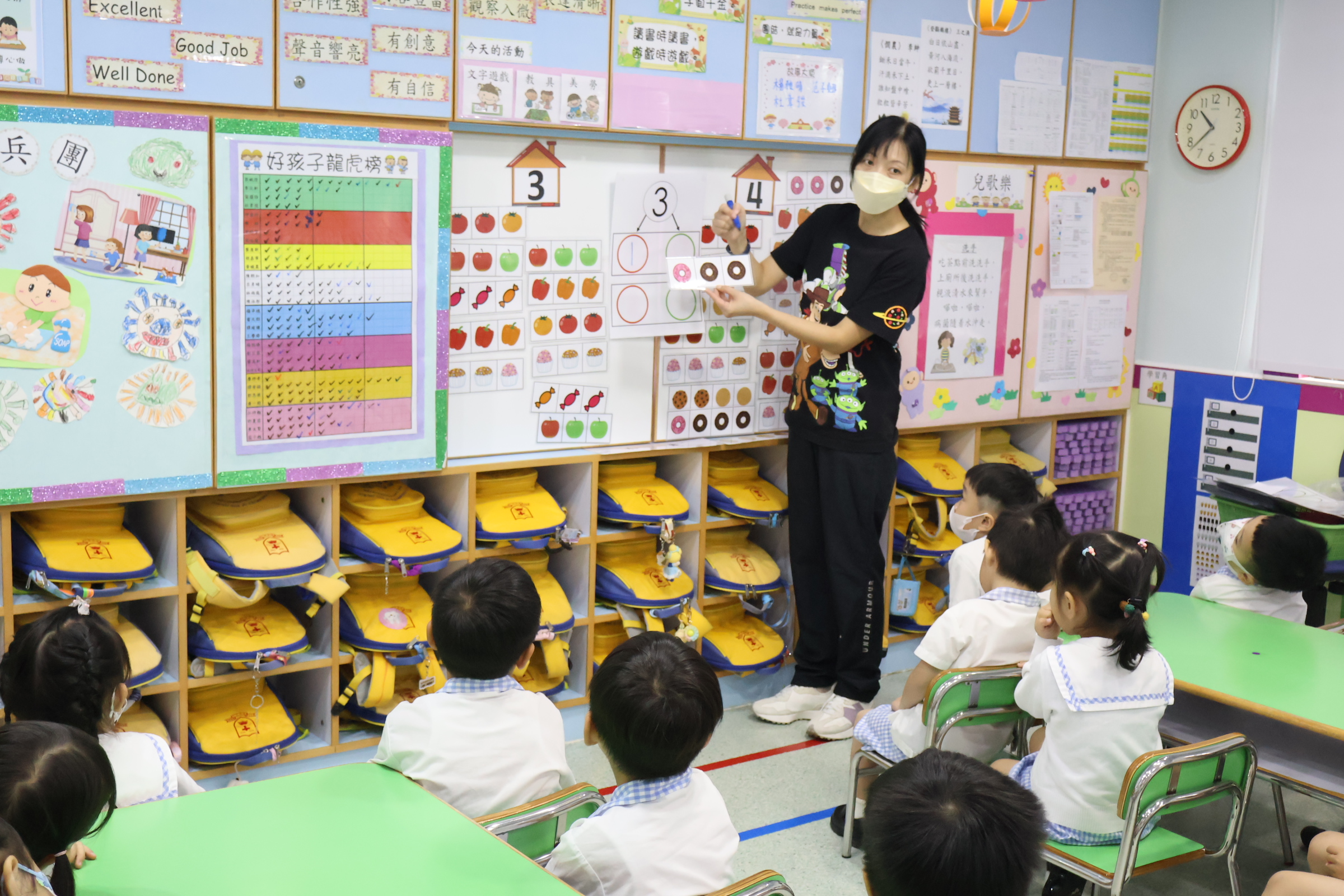
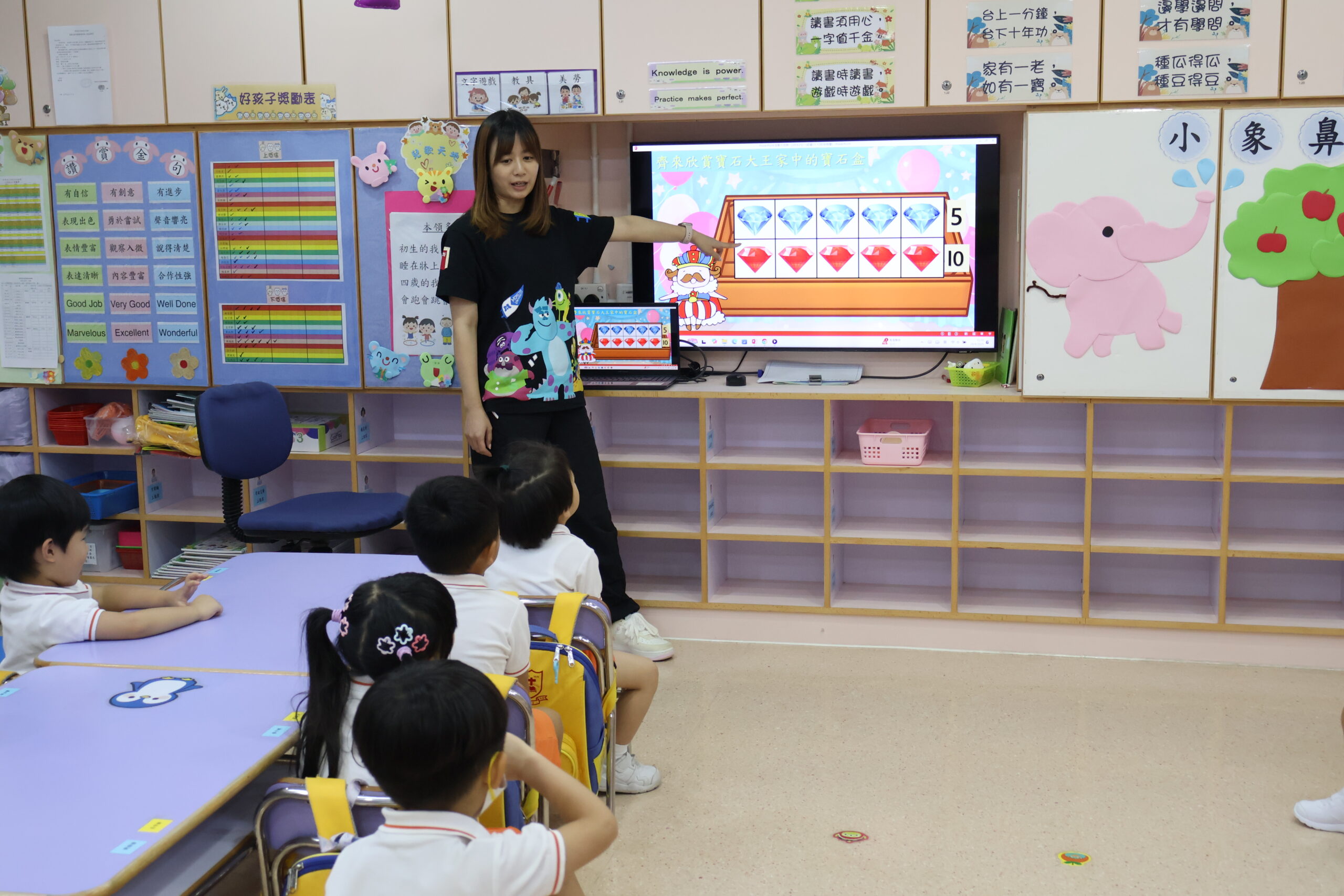
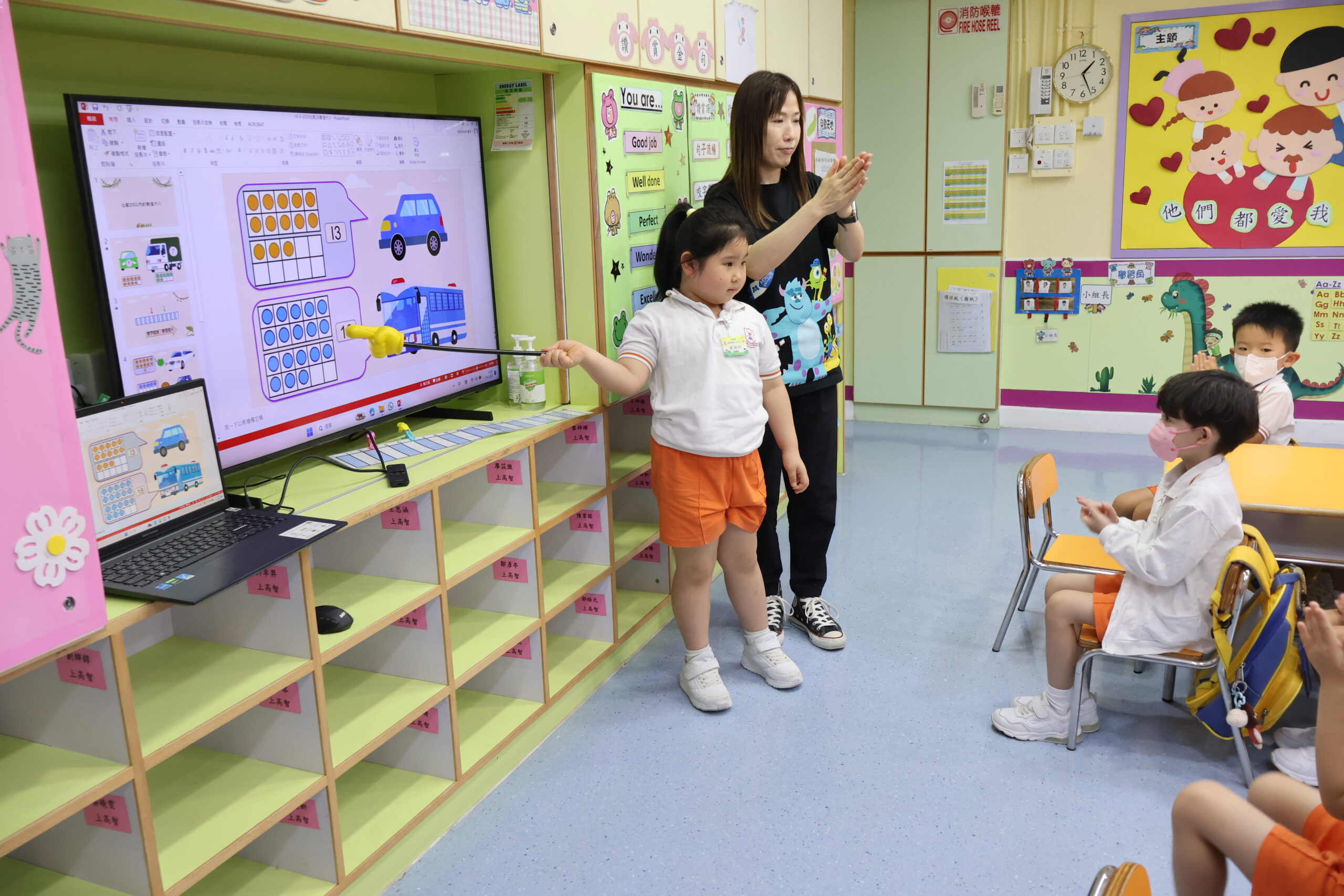
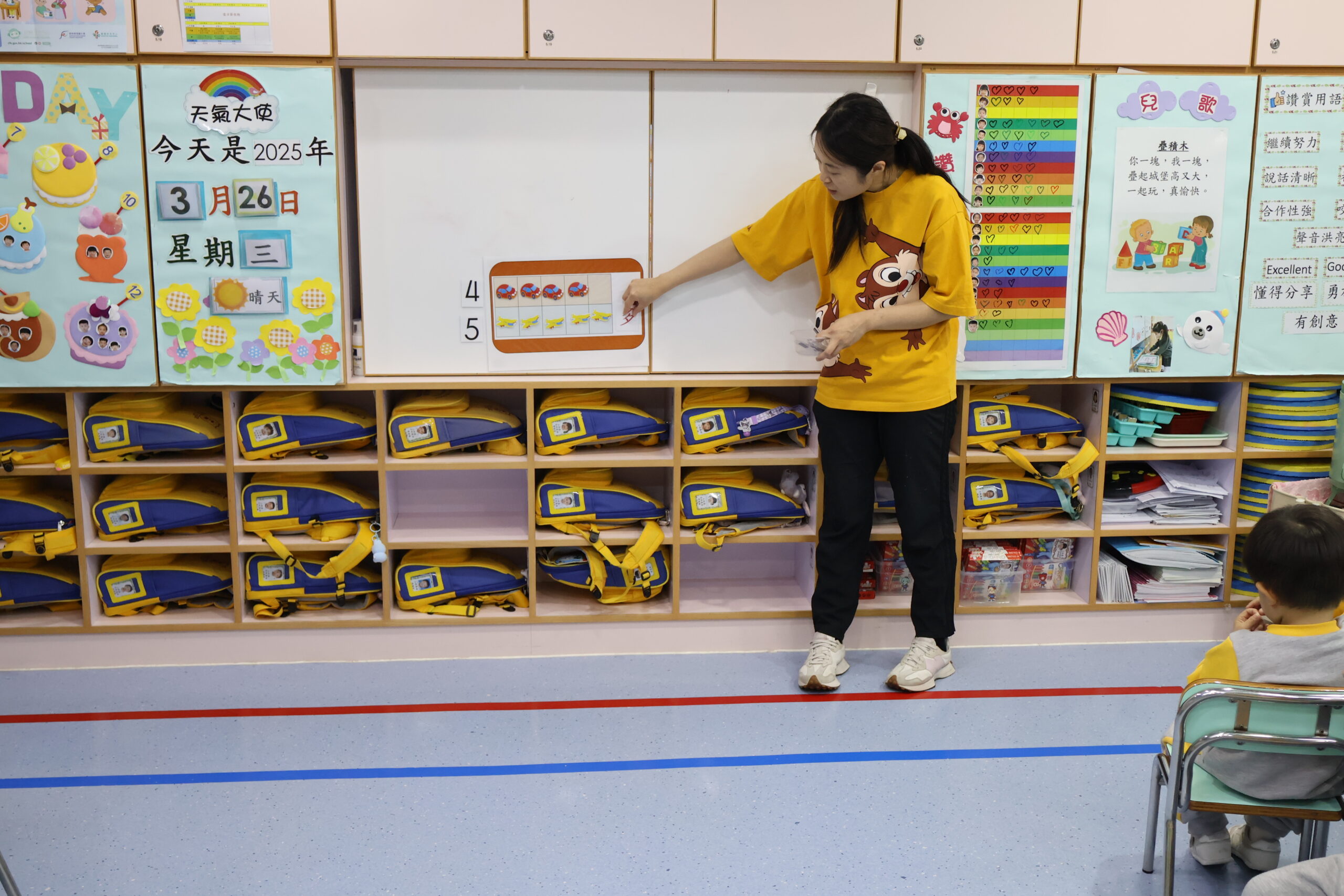
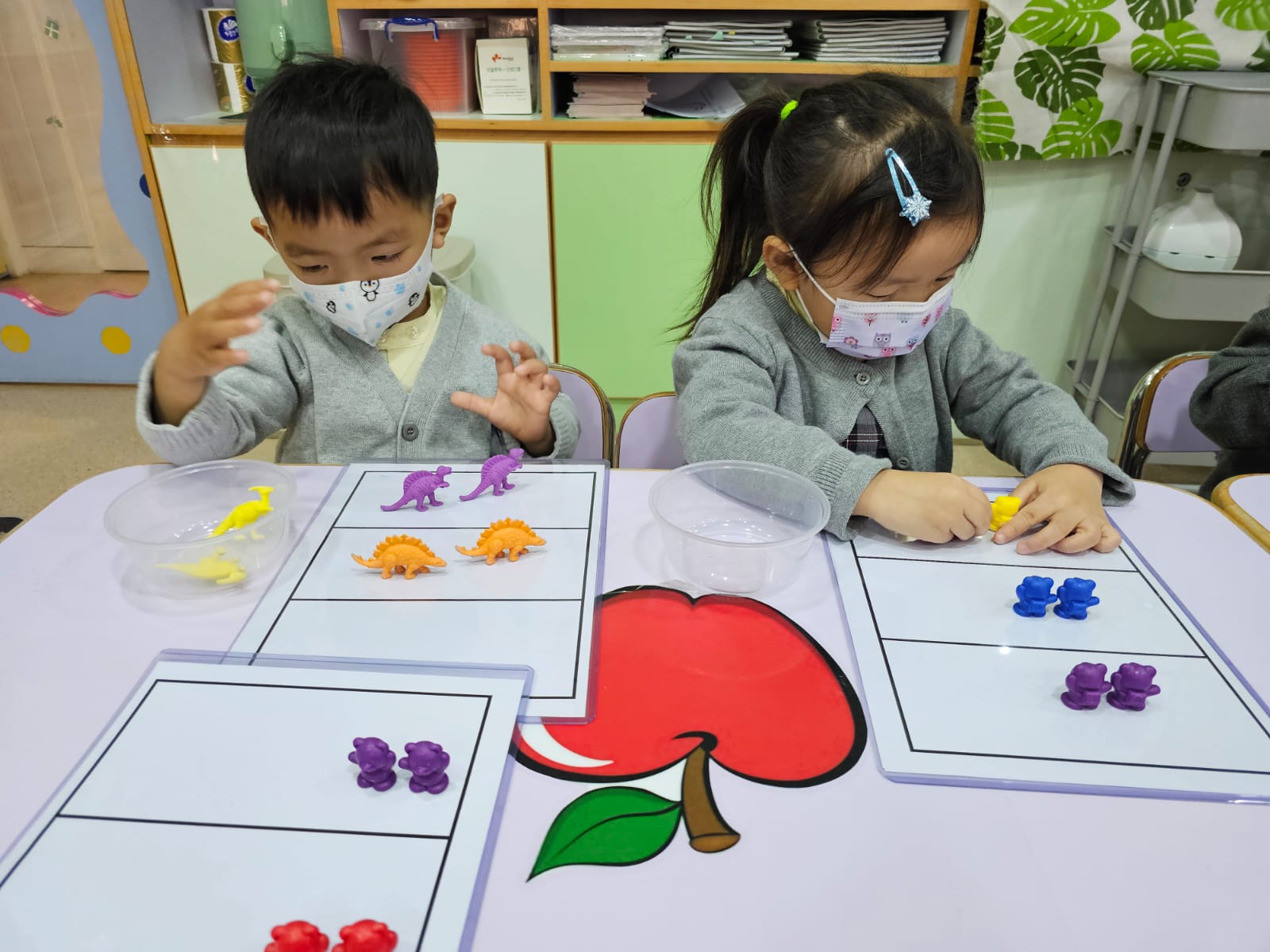
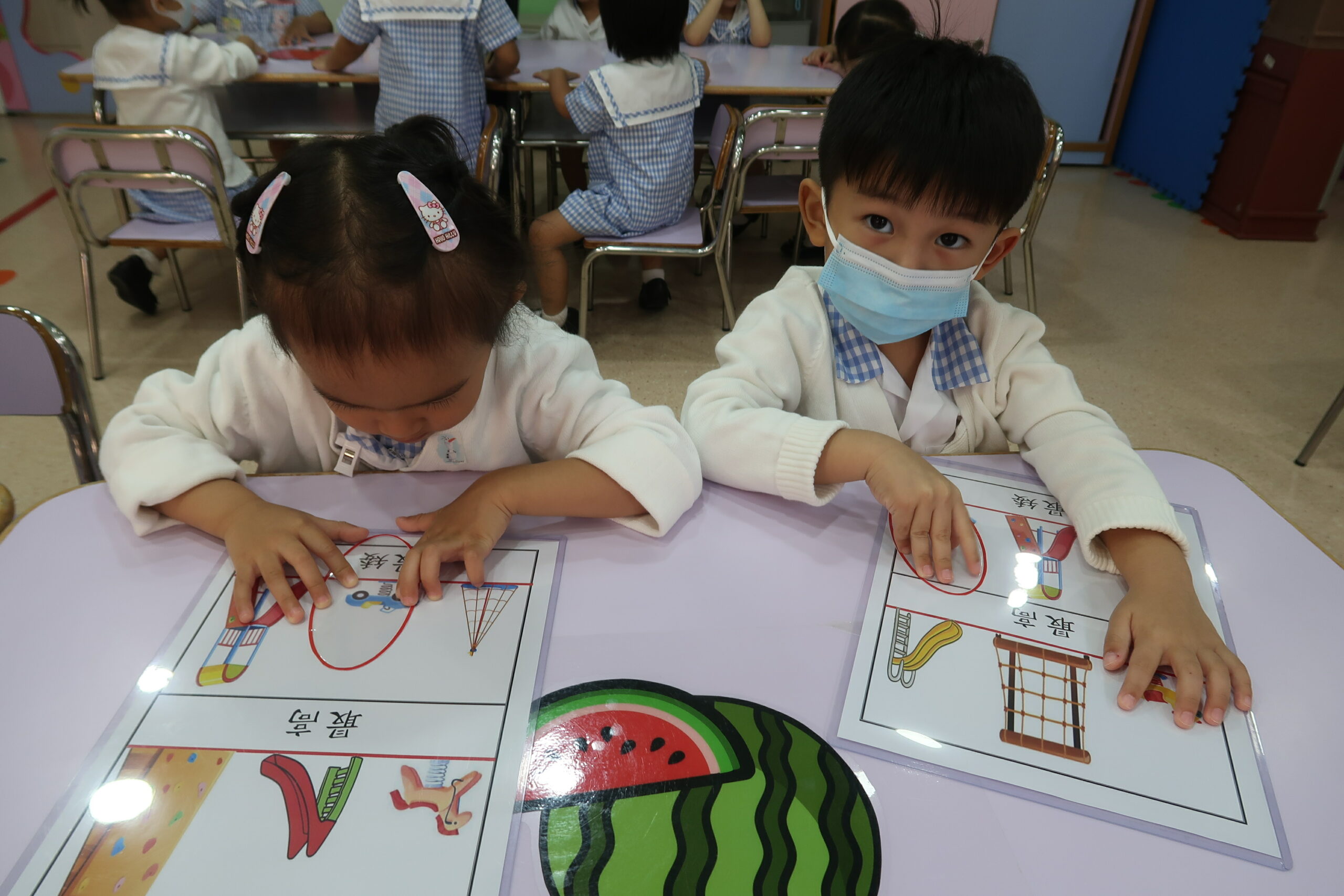
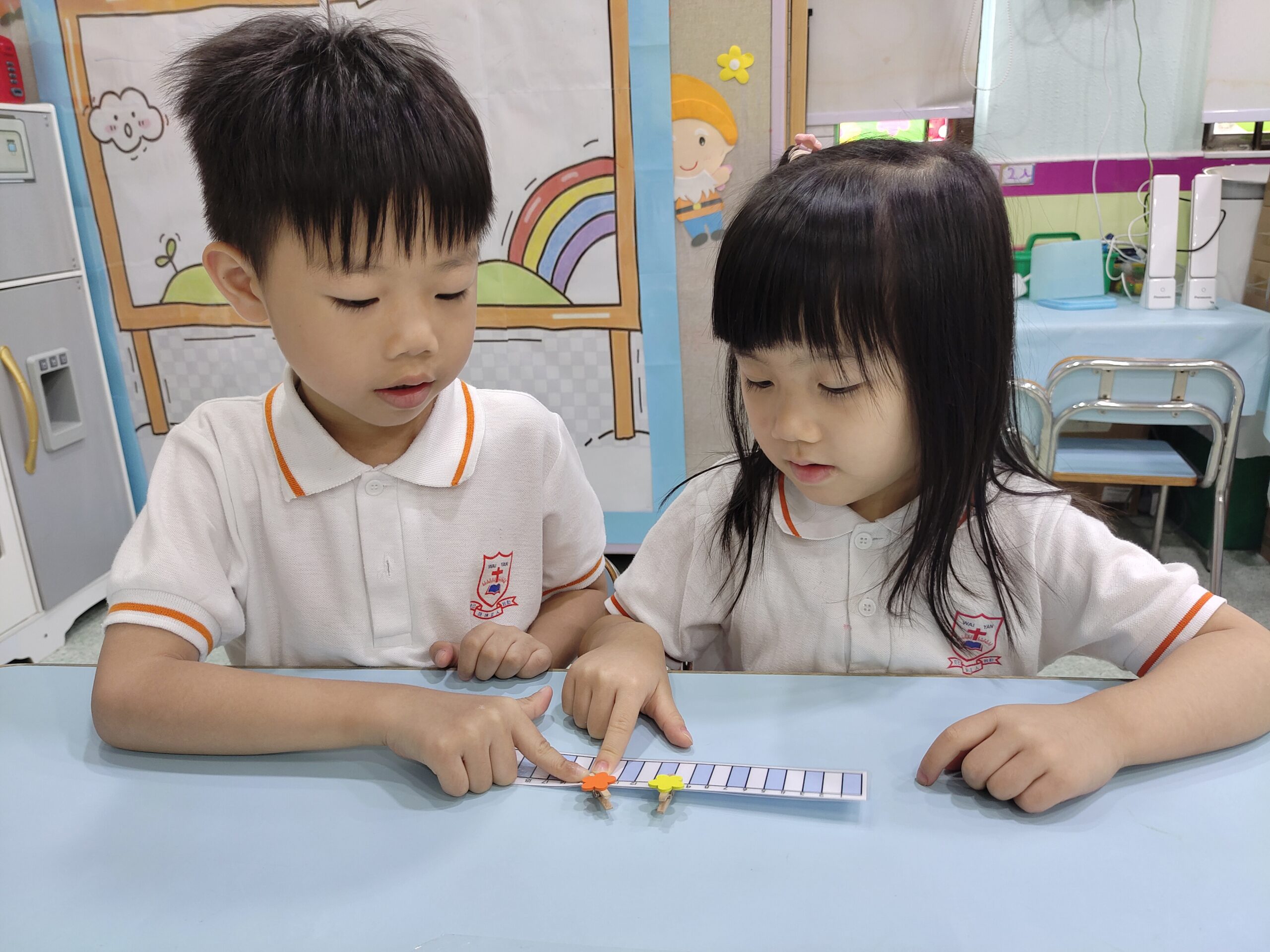
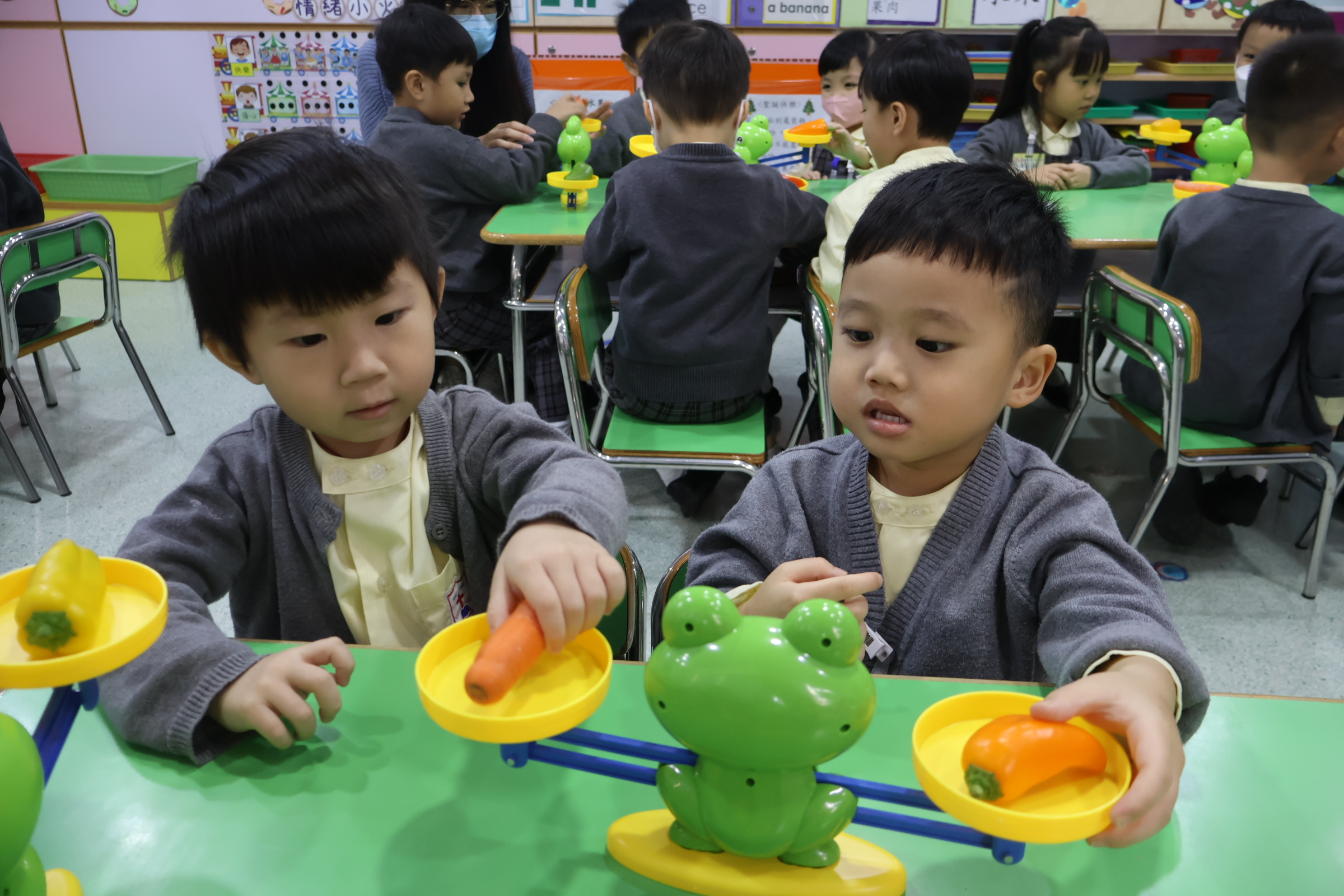
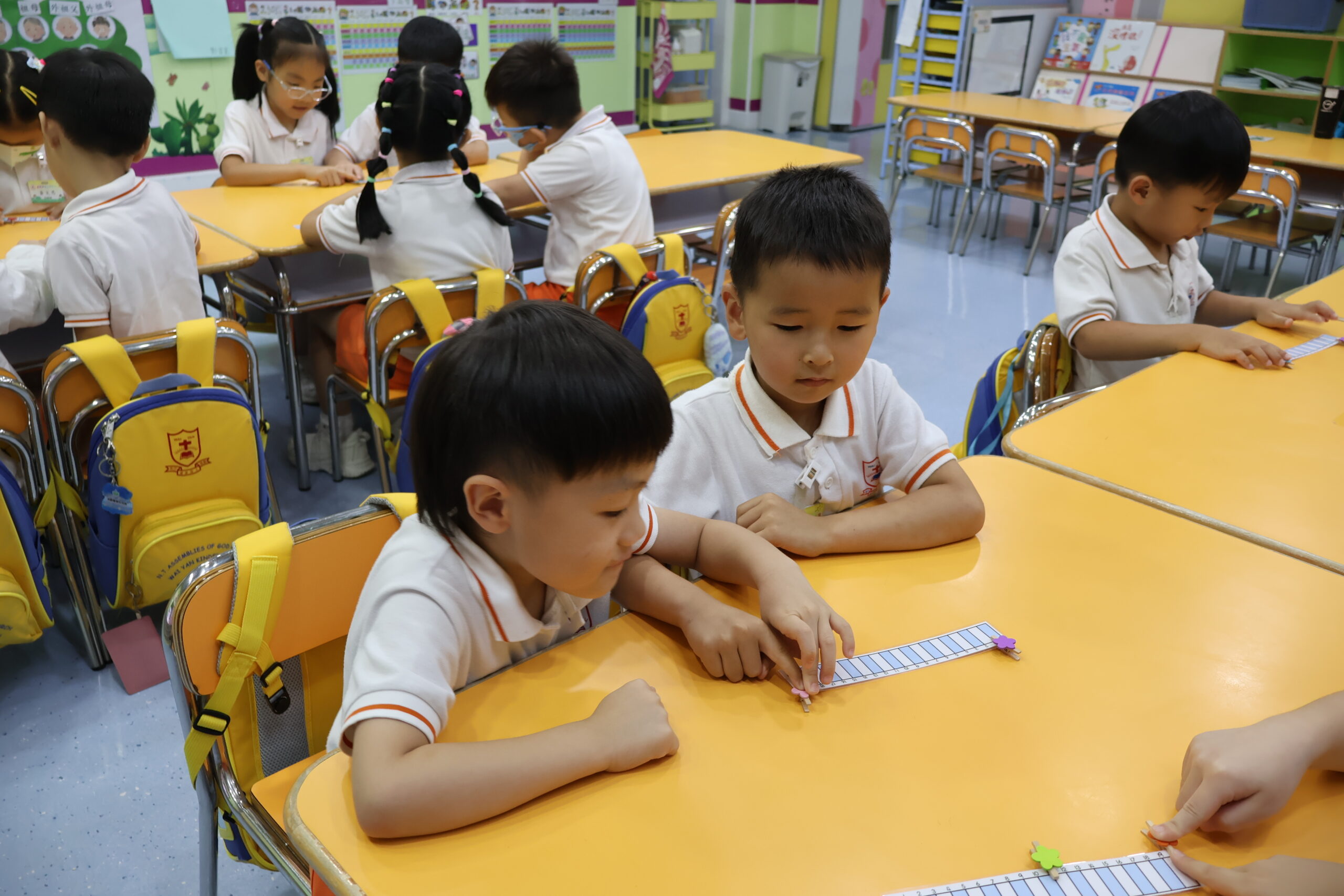
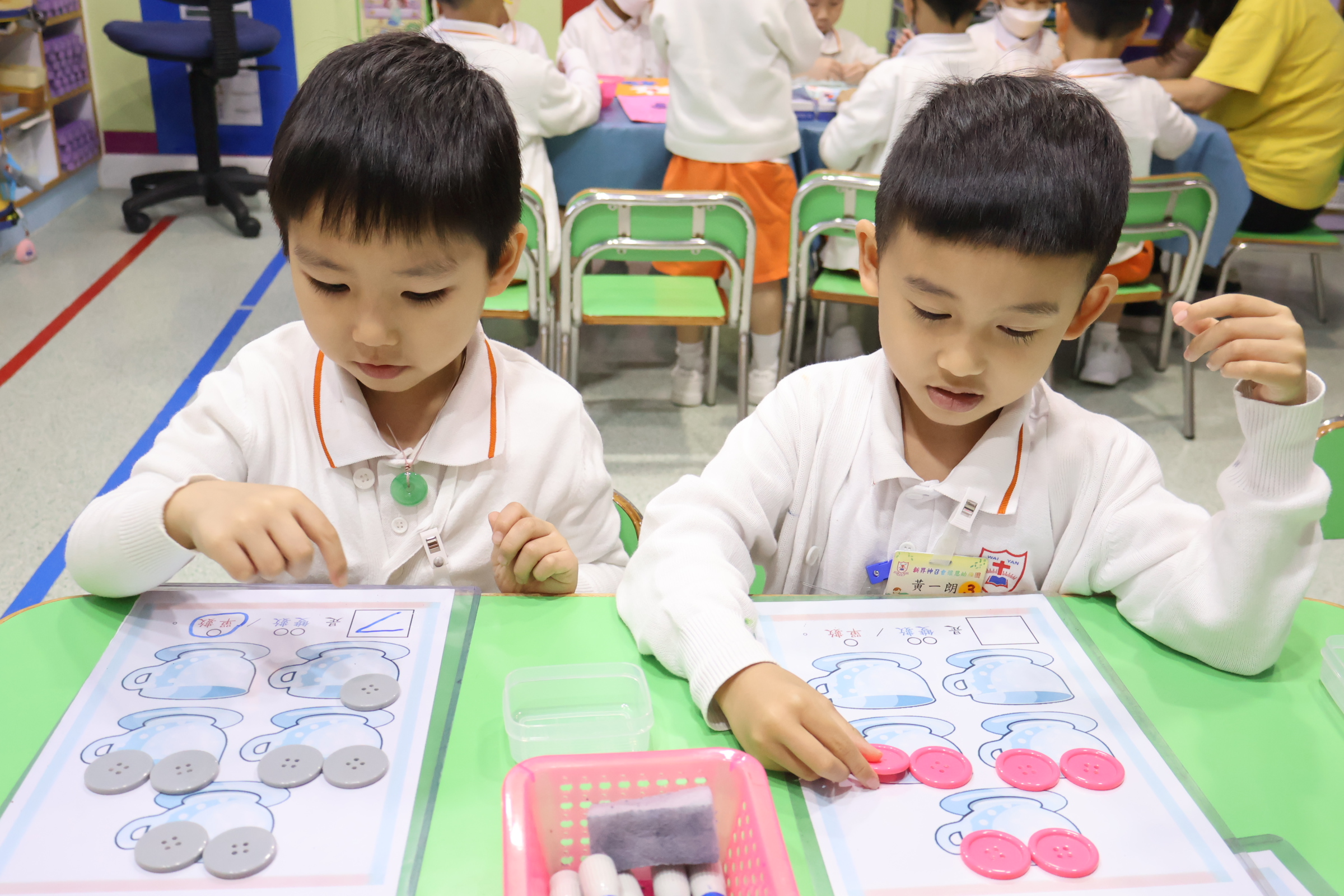
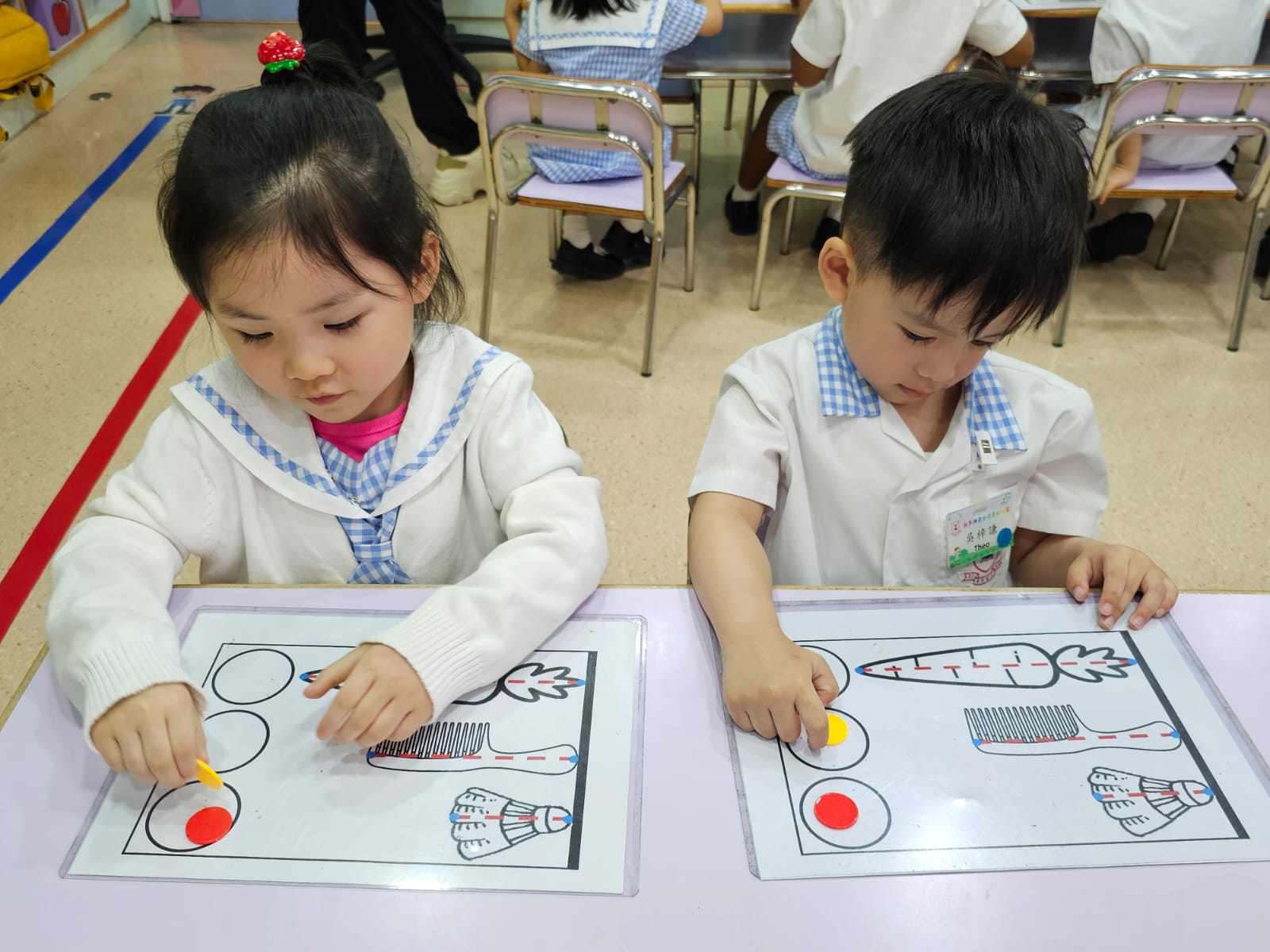
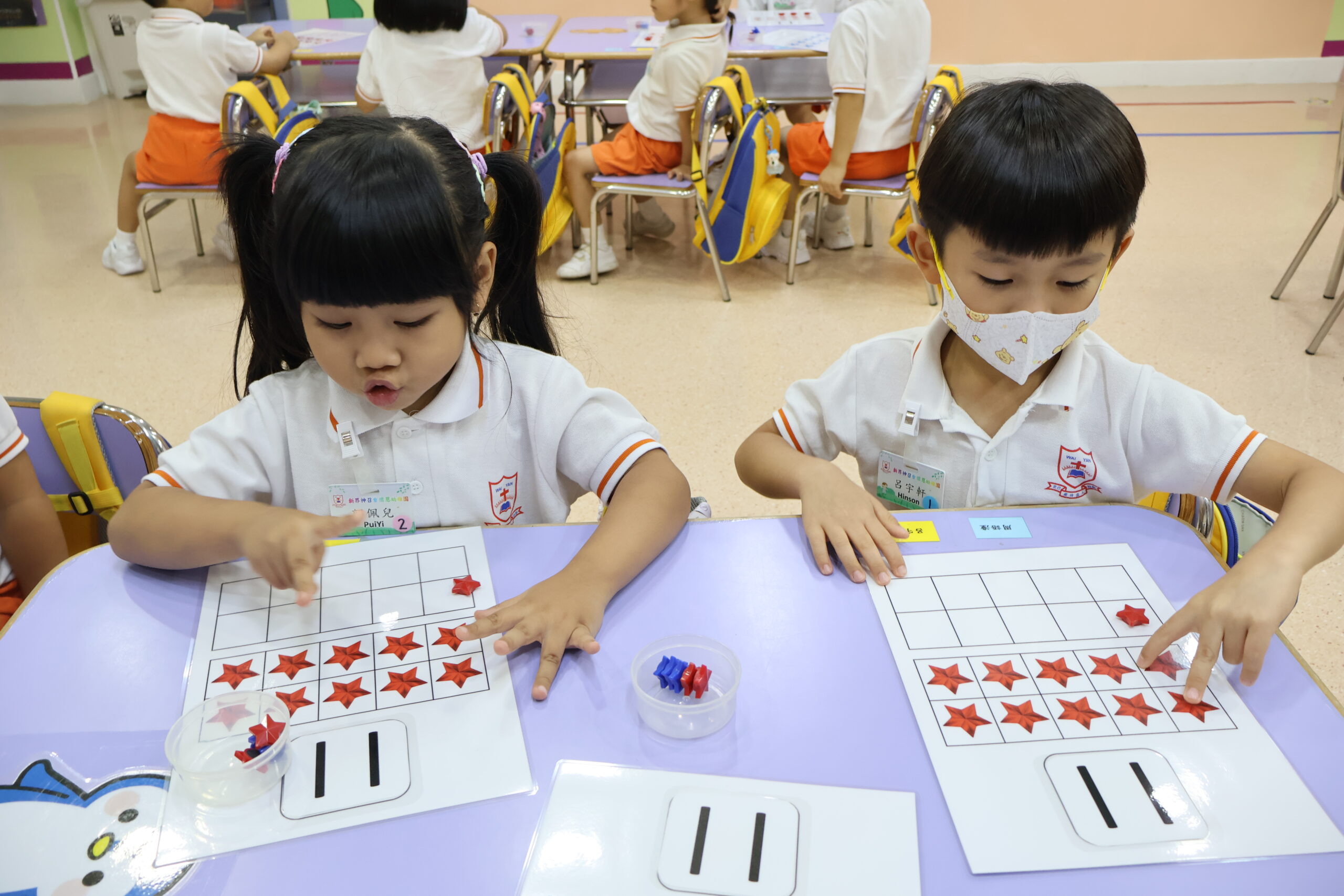
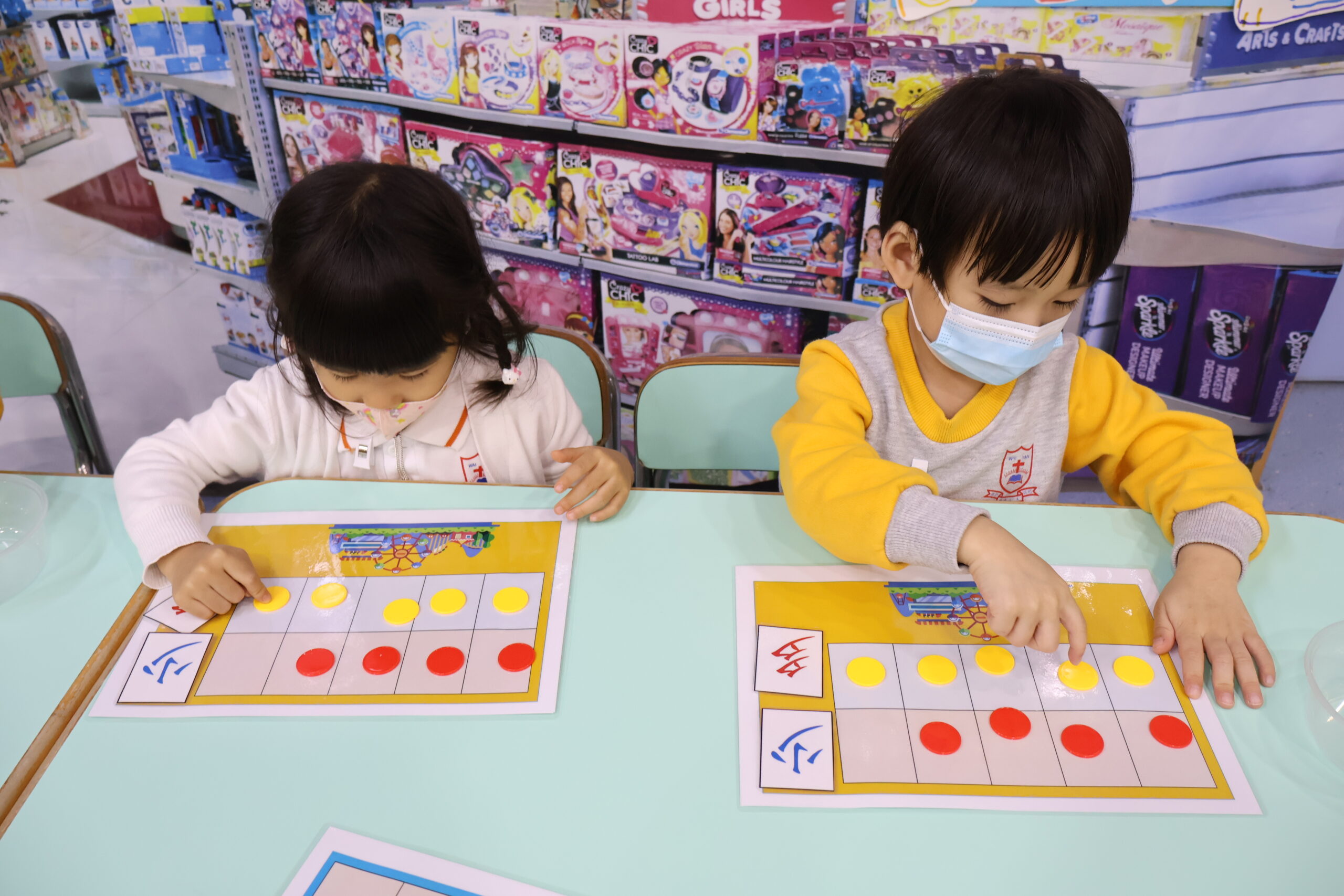
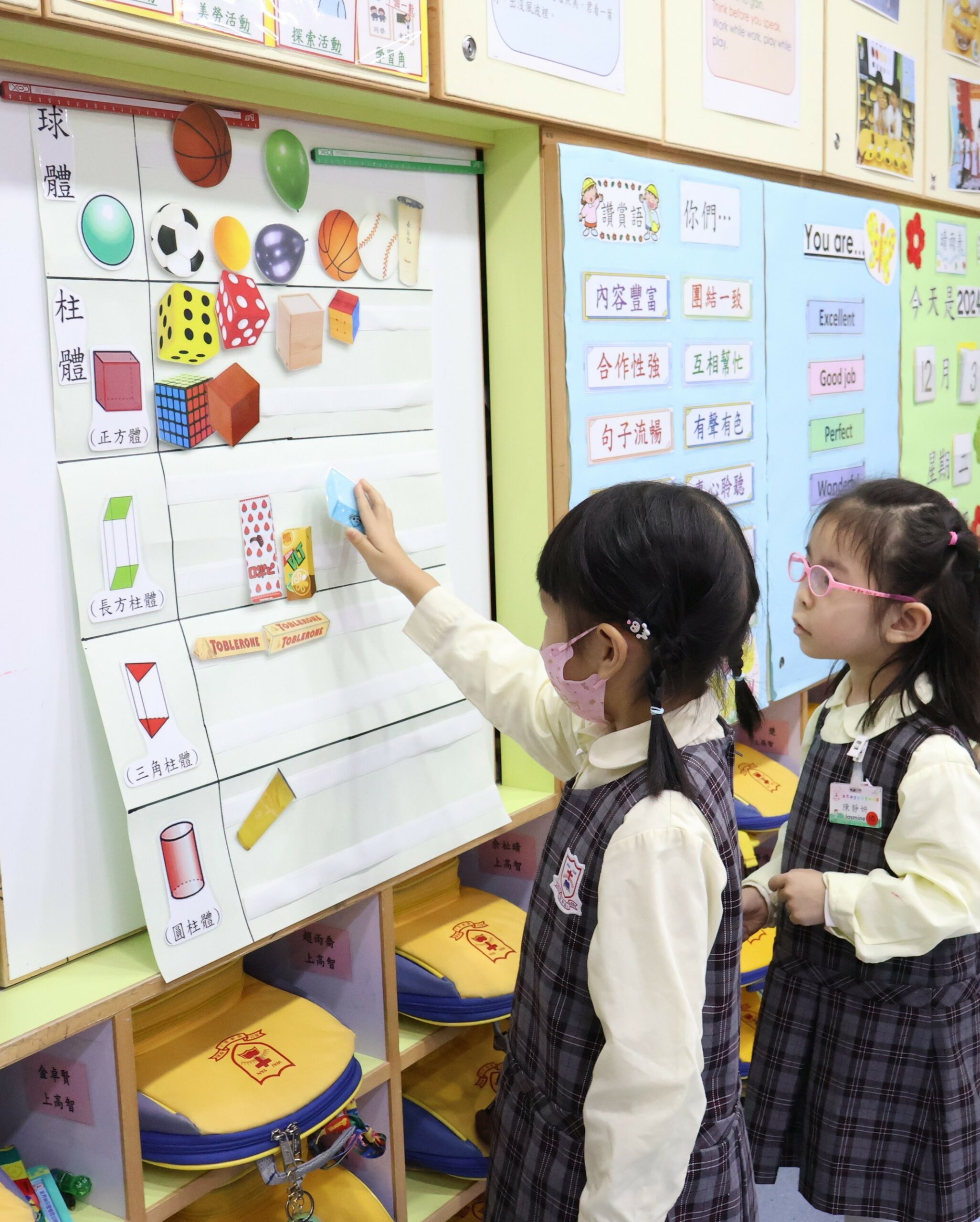
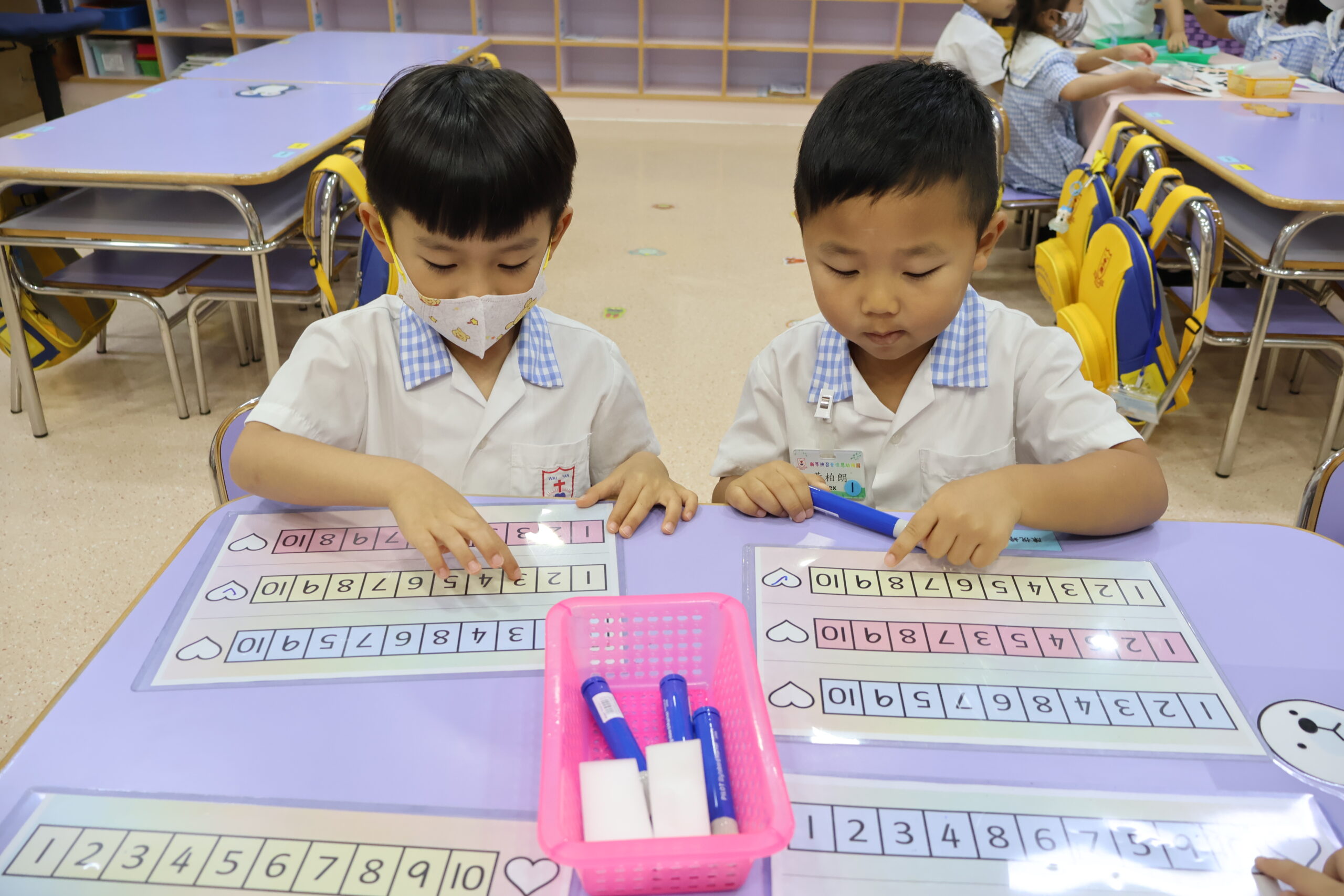
The school invited Mr. Simon Hung, a former senior lecturer in the Education Department at Hong Kong Baptist University, to conduct a two-year “5E Early Childhood Mathematics Strategy” teacher training for all teachers. This training allowed teachers to experience the joy of mathematical games firsthand. Through collaborative lesson planning, they designed engaging and fun mathematical games that integrate mathematics into everyday situations, enabling children to learn through play and grow through action. The 5E model fosters children’s observation, thinking, and creativity, allowing them to think flexibly and try boldly in the world of mathematics, laying a strong foundation for future learning!
The 5E Early Childhood Mathematics framework consists of five stages: Engagement, Exploration, Explanation, Elaboration and Evaluation. Through this model, children are led into a fun and inspiring mathematical world!
Through lively stories and interesting role-playing, children’s interest in learning mathematics is sparked.
Review old experiences: Activities help children recall and reinforce previously learned mathematical concepts.
Encounter new knowledge: Children experience and manipulate, thereby understanding new mathematical concepts.
Experience connection: Teachers use the previous stage’s game experiences as a basis to explain relevant mathematical concepts and techniques.

Guided discussion: Teachers lead children to discuss the game process and results, encouraging them to express ideas and think critically to understand concepts.
Children apply learned mathematical concepts and techniques in new mathematical games. Through interaction, discussion, practice, and application, mathematics becomes easier to grasp.
5. Evaluation: Review learning outcomes
Through assessment activities, determine whether children have mastered mathematical knowledge and reinforce their learning outcomes.